
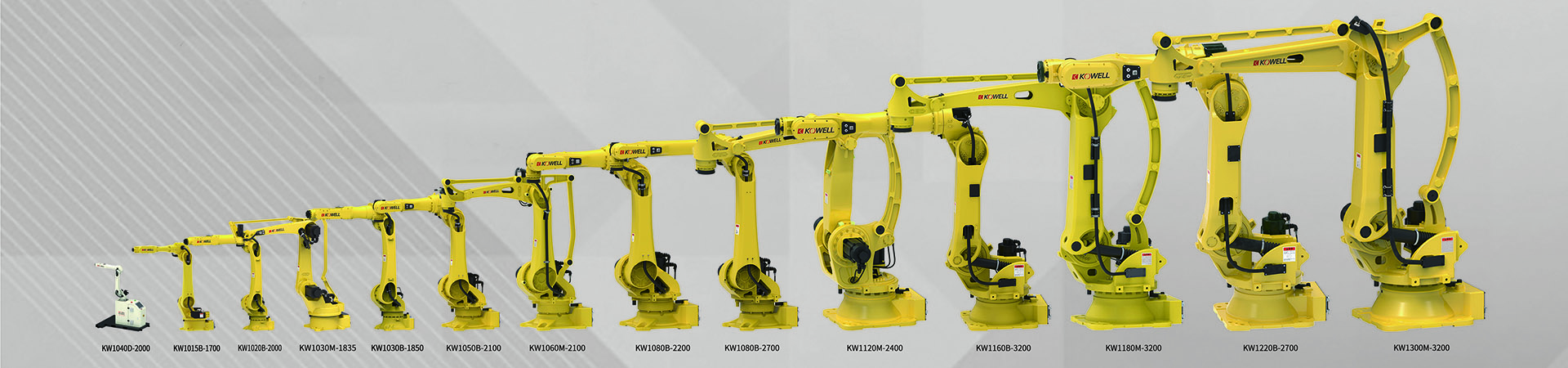
In food production workshops, the traditional palletizing process is often a bottleneck to efficiency. Workers perform high-intensity, highly repetitive material handling and stacking operations day after day, facing not only high labor intensity and low efficiency but also the dual pressures of occupational health risks and stringent hygiene standards.
To address these challenges, the food industry has introduced traditional industrial robots for automation. However, while these robots can partially replace human labor, their long deployment cycles, poor flexibility, complex operation, and the need for extensive physical fencing make them unsuitable for the diverse, small-batch production characteristics of the food industry.
Traditional Palletizing: Three Major Bottlenecks in Efficiency Improvement
The food industry features rapid product iteration and diverse packaging specifications, placing extremely high demands on production line flexibility and stability. Traditional industrial robots exhibit the following shortcomings in this scenario:
◈ High Space Deployment Barrier: Traditional robots are bulky and difficult to install flexibly in space-constrained workshops, creating additional obstacles for food companies with already limited space.
◈ Poor Production Line Flexibility: Faced with diverse box types on the production line, traditional equipment requires lengthy changeover and debugging, necessitating professional intervention. It cannot adapt to the flexible production rhythm of multiple varieties and small batches, resulting in low equipment utilization.
◈ Numerous Safety Isolation Restrictions: Due to the lack of human-robot collaboration safety mechanisms, traditional robots often require isolation measures such as fences and safety light curtains. This increases system complexity and cost, and also limits the flexibility of production layout.
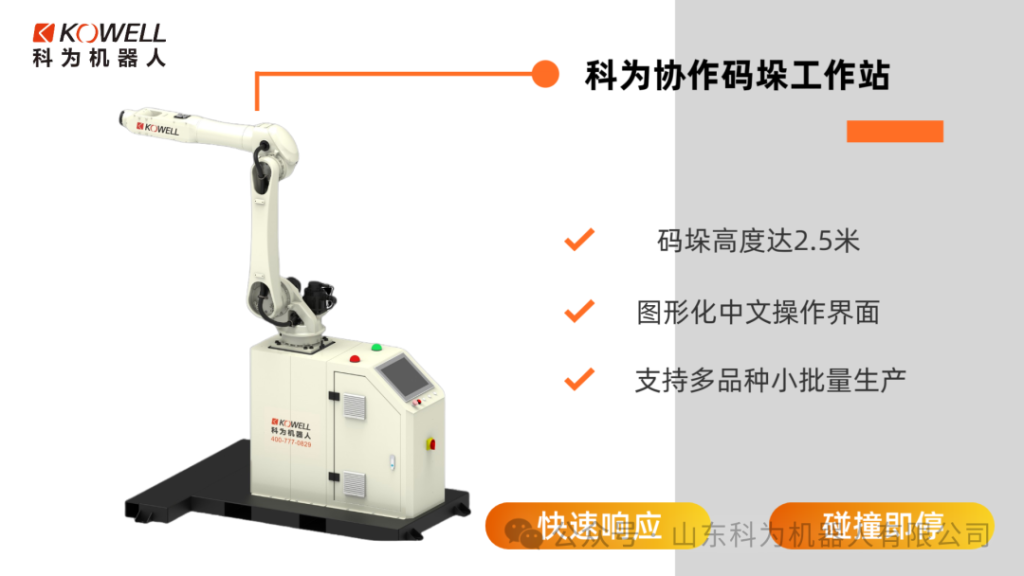
A Breakthrough Solution: Kewei's Collaborative Palletizing Workstation's "Triple Innovation"
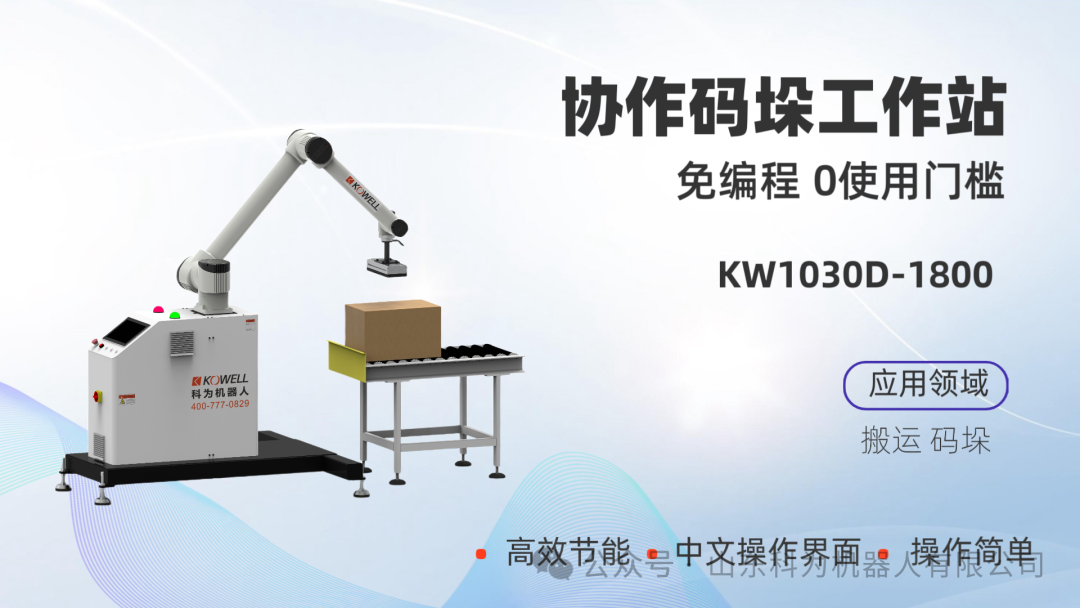
In stark contrast to traditional solutions, the collaborative palletizing workstation integrates intelligent sensing, flexible control, and human-machine collaboration technologies, bringing a completely new solution to the food industry. Based on a deep understanding of industry pain points, Kewei Robotics' collaborative palletizing workstation demonstrates the following three major innovative advantages:
- Simplified Operation, Lowering the Barrier to Automation
Equipped with a graphical intelligent operating system, it simplifies tasks requiring hundreds of parameters to just six core inputs. Workers can quickly configure product stacking patterns by simply dragging and dropping on a touchscreen or inputting dimensional parameters, achieving "product change in 5 minutes, production line change in 30 minutes." This design breaks the traditional "engineer programming, worker execution" model, significantly reducing the barrier to entry and time costs for automation deployment.
- Flexible Adaptability Across All Scenarios
Addressing the rapid product iteration and diverse packaging characteristics of the food industry, Kewei achieves flexible response through three technologies:
◈ Intelligent Process Packages: Pre-set with six standard stacking patterns for food, chemicals, and other industries, supporting the storage of 100+ recipes, easily handling changes in packaging specifications.
◈ Modular End-Factory Actuators: Customizable end-effect actuators adapt to the grasping needs of materials in different shapes.
◈ Compact and Intelligent Lifting Design: Adapts to the dense production line layout of food factories and can dynamically adjust its height to connect with multi-layer conveyor lines.
- Comprehensive Safety Protection System
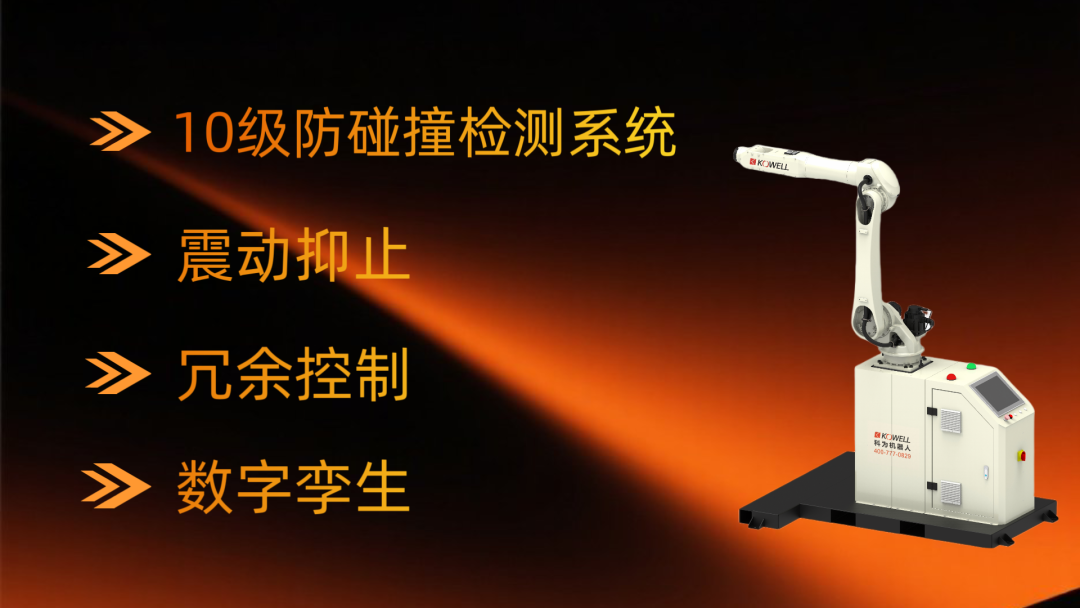
◈ Collision Avoidance Detection: Equipped with a Level 10 collision avoidance detection system, achieving "stop upon collision," constructing a safety barrier and reducing accident risks and potential losses.
◈ Safety Redundancy Architecture: Equipped with 16 safety I/O interfaces, the redundant design ensures that safety functions are not lost in the event of a single failure, reducing safety hazards from a hardware perspective.
With the integration of artificial intelligence and IoT technologies, palletizing workstations are evolving towards self-decision-making and self-adaptation. Kewei Robotics, anchored by "zero programming," not only solves the current pain points of the food industry but also injects enterprises with agile capabilities to cope with market fluctuations. In the future, technological iteration will further drive the food industry's profound leap from "manufacturing" to "intelligent manufacturing."
Online Consultation
Hello, the current customer service is offline. You can leave your contact information and the staff will respond to you as soon as possible!