
As global manufacturing enters the deep waters of intelligent manufacturing, industrial robots have transcended mere production tools to become core carriers of national strategic scientific and technological strength. In this competition concerning technological discourse power and industrial dominance, China's strength is achieving a historic leap from sheer scale to technological leadership.
Shandong Kewei Robotics Co., Ltd., a listed "seed enterprise" valued by Tai'an City and a "specialized, refined, and innovative" SME in Shandong Province, has built a 70% domestic market share in the material handling and palletizing field through its full-stack self-developed core technologies and deep penetration into specific scenarios. The strategic significance of this figure lies not only in its considerable market share but also in signifying that Kewei has transformed from an equipment supplier into an industrial ecosystem builder that defines industry standards and leads technological development.
Technological Sovereignty: From Fundamental Breakthroughs to Standard Definition
The traditional industrial robot field has long been hampered by the "impossible triangle"—the difficulty of simultaneously achieving precision, efficiency, and ease of use. Solving this classic problem tests a company's depth of mastery over underlying technologies and its systemic innovation capabilities.
Kewei Robotics, relying on the "Shandong University-Kewei Robotics Research Center" jointly established with Shandong University, has built an innovative paradigm of deep integration of industry, academia, and research. This collaboration not only achieves a seamless connection between cutting-edge theoretical research and engineering application capabilities but also gave rise to Kewei Robotics' core technological barrier—the "zero-programming" OPIS intelligent interactive system. This system, through a 15.5-inch industrial-grade touchscreen and a graphical Chinese interface, simplifies the debugging work that traditionally required hours of time from professional engineers to a drag-and-drop operation by ordinary workers, improving equipment switching efficiency by over 60%.
The technological essence of this breakthrough is a fundamental reconstruction of the human-machine interaction paradigm. Within the current international academic community's hotly debated framework of Robotic Foundation Models (RFMs), Kewei's exploration path precisely aligns with the cutting-edge direction of evolution from "pre-programmed control" to "instruction and demonstration-driven" approaches. When flexible manufacturing demands that equipment rapidly respond to diverse, small-batch needs, the correct logic for intelligent manufacturing is to enable machines to adapt to humans, rather than humans adapting to machines.
Product Matrix: A Dual Breakthrough in Precision and Performance
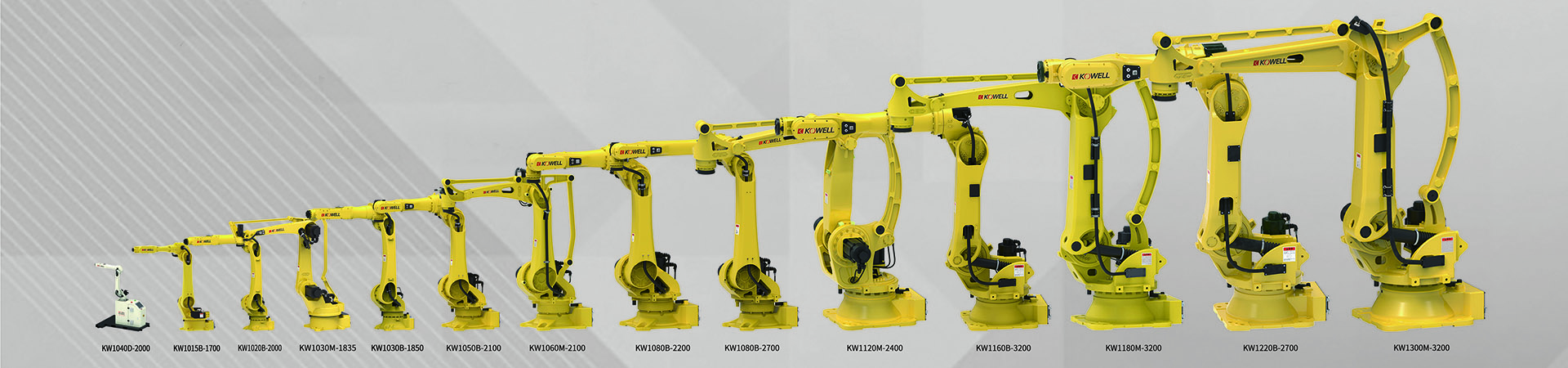
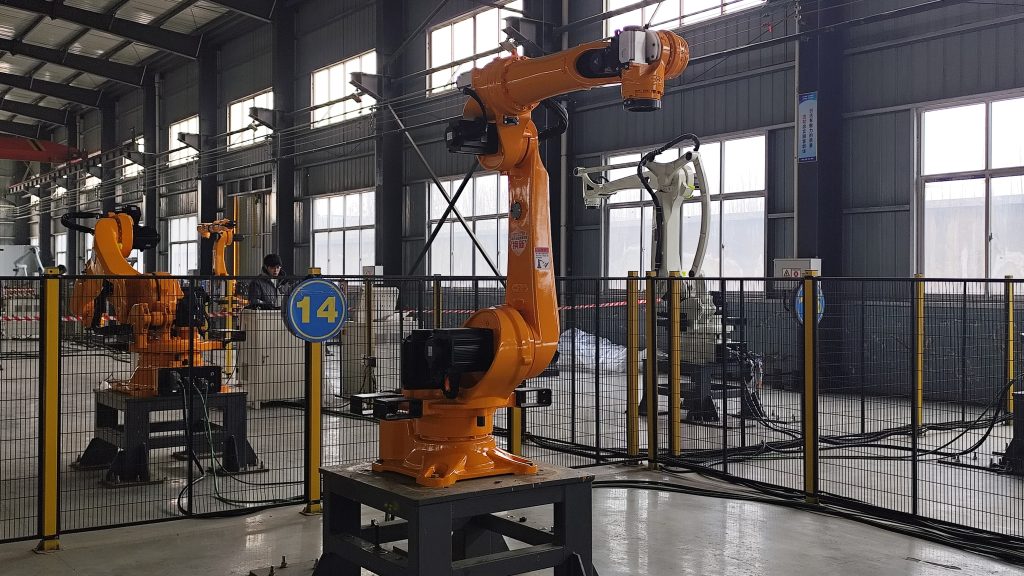
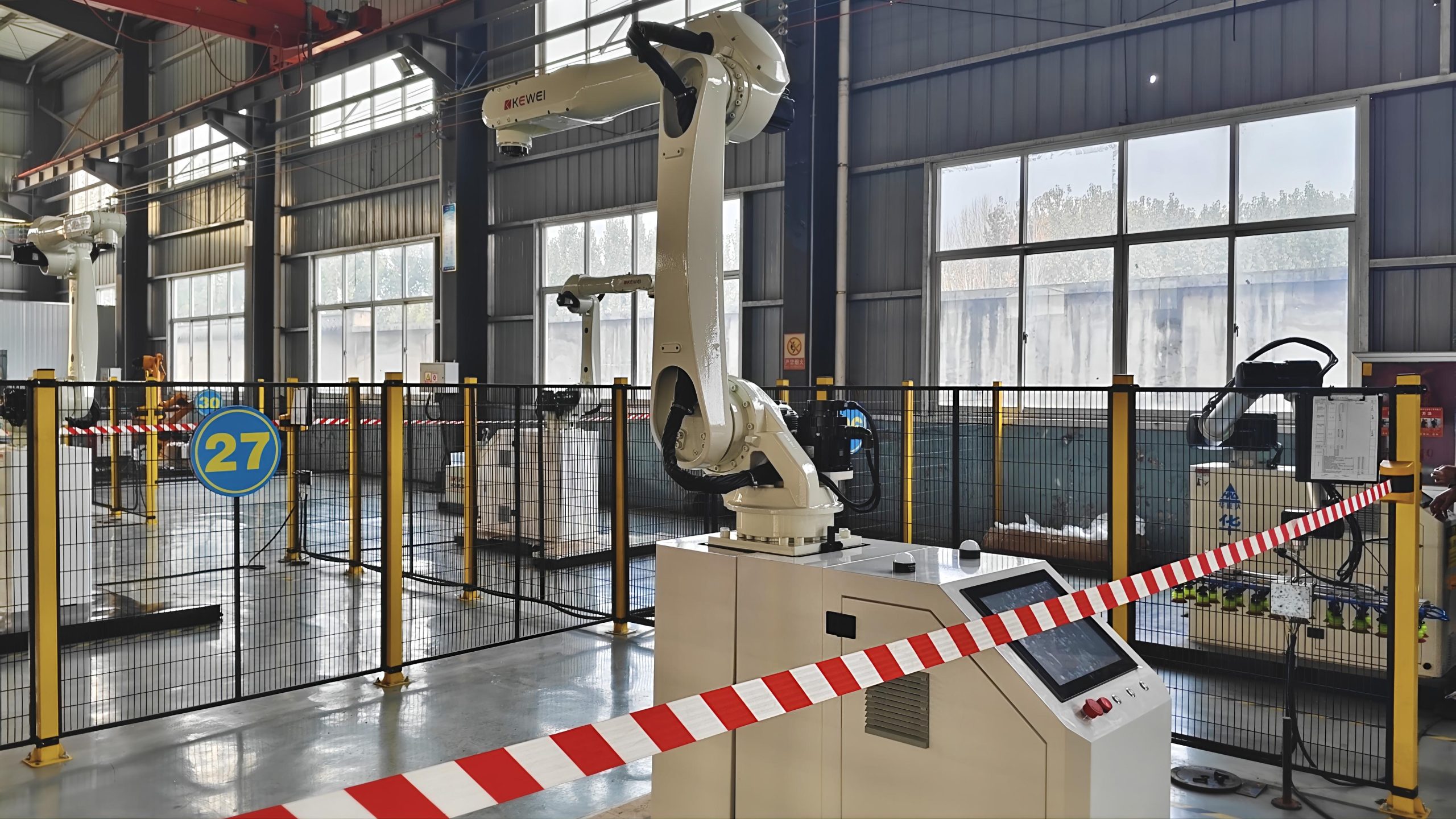
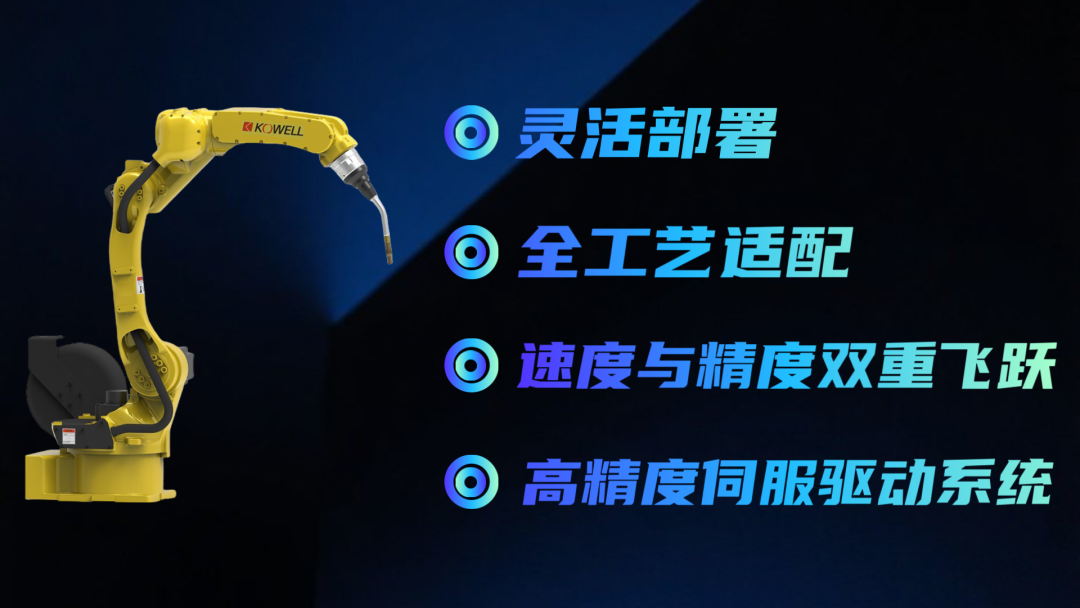
Technological foresight needs to be materialized into quantifiable product capabilities. Kewei has built a matrix-style product system covering diverse scenarios such as palletizing, welding, and material handling. The technical parameters of its core models are competitive with domestic brands.
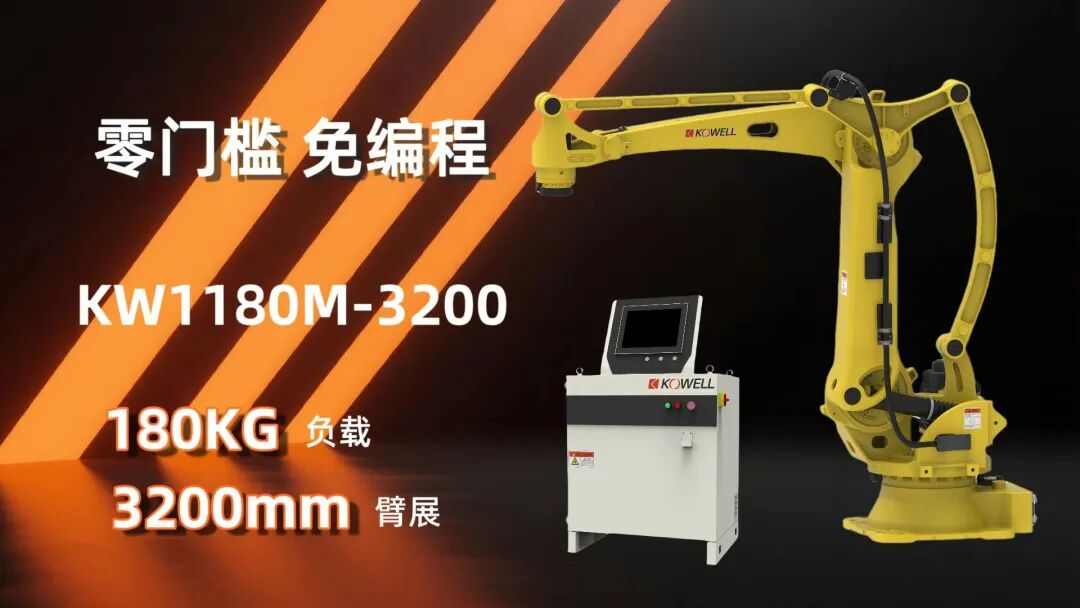
Take the flagship KW1180M-3200 four-axis robot as an example. This product, with its high-precision servo drive technology, can adapt to multi-level production lines with varying elevations. In terms of performance, its repeatability is controlled within ±0.2mm—a figure that falls within the operational range required for precision material handling. The KW1120M high-load model maintains a motion accuracy of ±0.2mm while increasing hourly throughput by more than 25% compared to similar products in the industry.
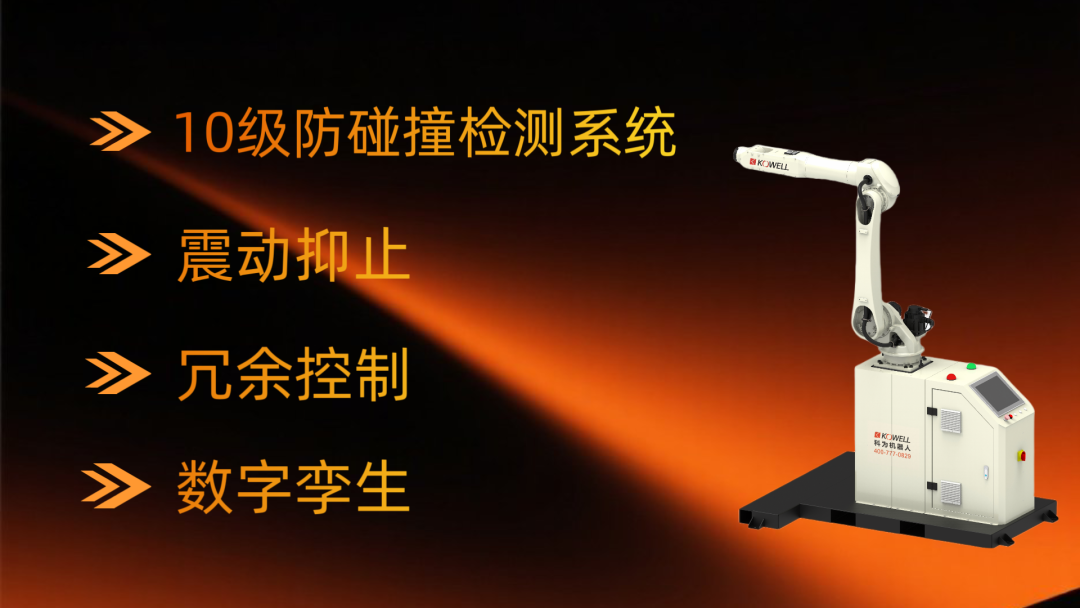
In terms of safety, the IP67/IP54 high protection rating and the safety architecture certified by the European Union CE enable it to confidently handle complex and harsh operating environments such as chemical and food processing. This persistent pursuit of safety redundancy aligns with the stringent safety standards required for human-machine collaboration in the Industry 5.0 era.
Industrial Collaboration: From Single-Point Breakthrough to Ecosystem Leadership
KEWEI's rise coincided with a strategic turning point where the market share of domestic industrial robots surpassed that of foreign brands. Data from the China Machinery Industry Federation shows that in 2024, the domestic market share of domestically branded industrial robots exceeded 50% for the first time, reaching 58.5%. Further data from the General Administration of Customs shows that in the first half of 2025, the export growth rate of domestically produced industrial robots surged to 61.5%.
In this wave of domestic substitution, KEWEI, with its technological moat built by 34 national patents and its self-controllable capability with a core component localization rate exceeding 95%, successfully became a "seed enterprise" for listing in Tai'an City. More noteworthy is KEWEI's deep integration into the collaborative ecosystem of Shandong Province's robot industry chain—from upstream precision reducers to downstream industry solutions, working with leading companies in the chain to build a competitive advantage through cluster development.
Strategic Foresight: Anchoring Embodied Intelligence and Globalization
If market share quantifies current strength, then strategic judgment on future technological routes determines a company's future potential. Kewei is accelerating its next-generation technology deployment with the strategic goal of "entering the first tier of the global robotics industry and rivaling international brands by 2025."
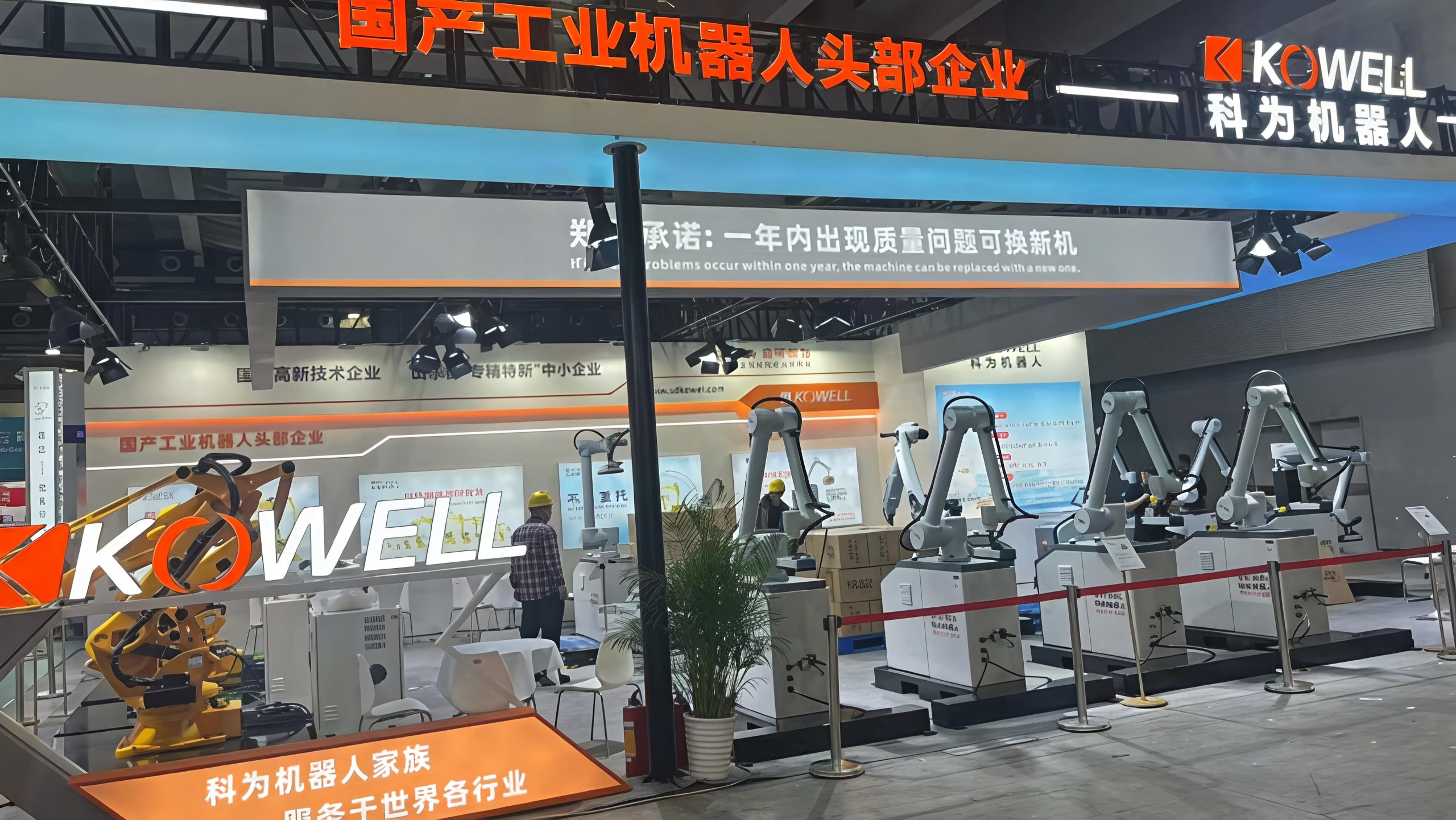
In terms of globalization, Kewei is accelerating the deepening of global value chain collaboration, expanding its global market presence through exhibitions and digital channels. From exporting products to exporting technical standards, Kewei's exploration clearly demonstrates that the role of "Made in China" in the global industrial chain is shifting from rule follower to standard definer.
From the technological persistence in breaking the "impossible triangle" to the humanistic care of "zero-programming" experience, and then to the ecosystem construction of full life-cycle services, Shandong Kewei Robotics Co., Ltd.'s advancement is essentially a reconstruction of its "intelligent manufacturing genes." As manufacturing logic shifts from scale priority to flexible response, and as machine language gives way to human instructions, Kewei is using the certainty of independent innovation to cope with the uncertainty of global industrial transformation, engraving the core value of Chinese brands in the deep waters of industrial automation.
In the vision of the factory of the future, the collaboration between humans and machines will be as natural as breathing. And Kewei is standing at the forefront of this wave.
Online Consultation
Hello, the current customer service is offline. You can leave your contact information and the staff will respond to you as soon as possible!