
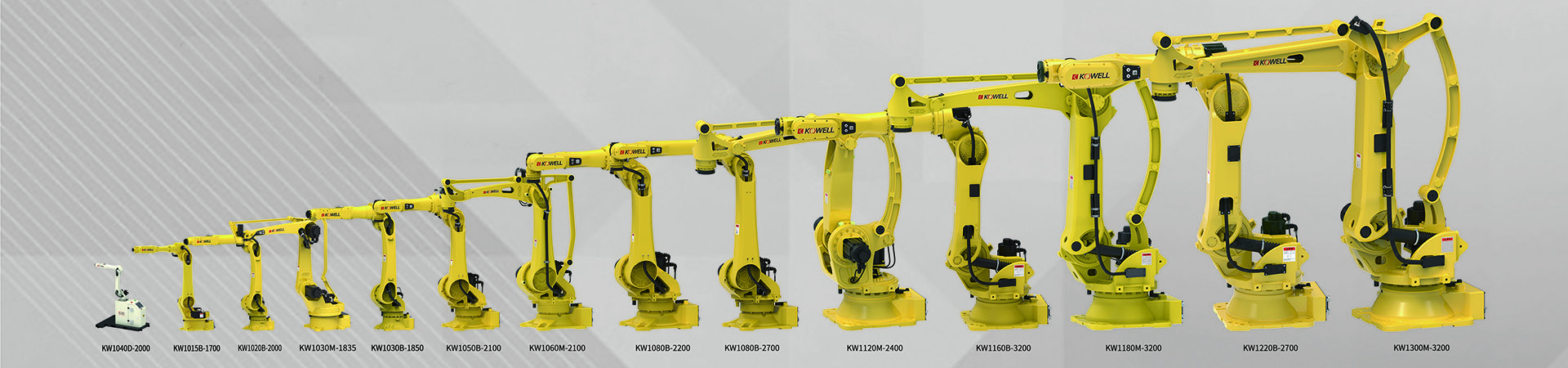
As manufacturing automation continues to evolve, system integrators are facing increasingly diverse project requirements. Limited factory space, multiple production processes, frequent changeovers, budget constraints, and tight delivery schedules all add complexity to automation projects.
A versatile 6-axis industrial robot with flexible installation options and easy integration can give system integrators more freedom in workstation design and help them deliver solutions for a wider range of applications.
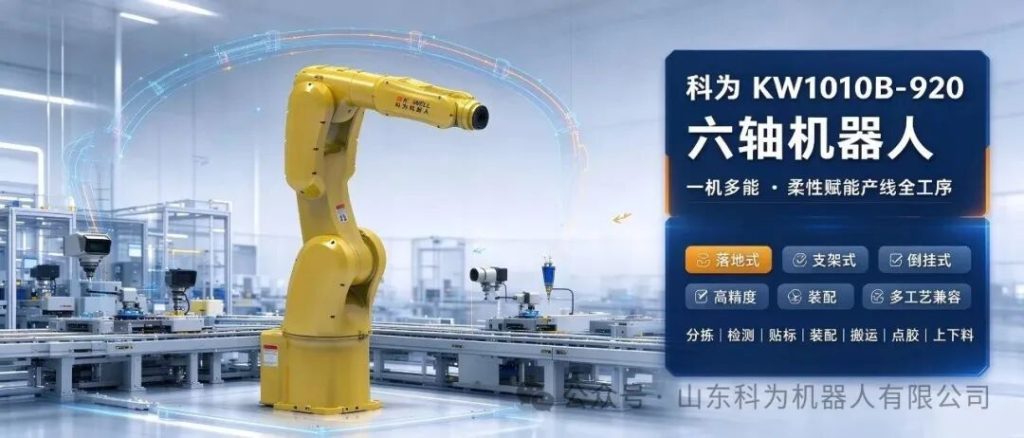
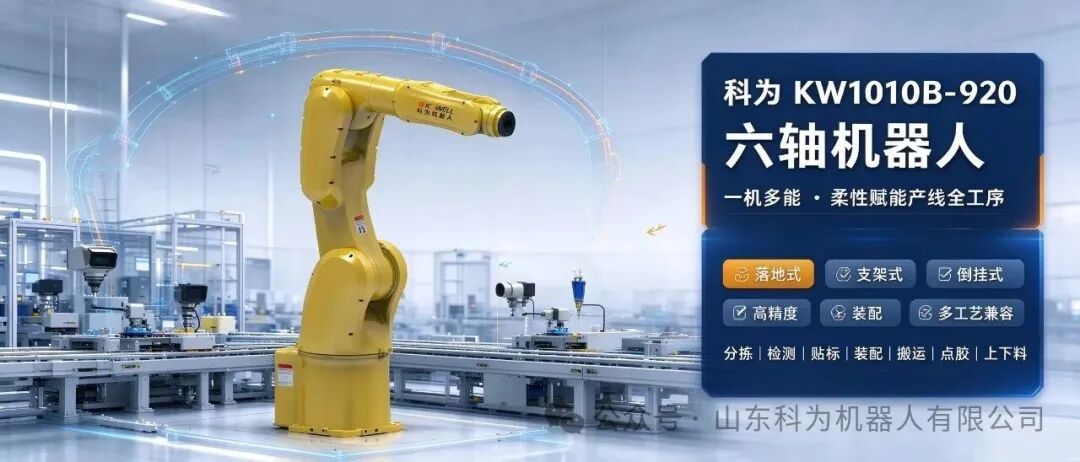
The Kowell KW1010B-920 6-axis industrial robot is designed for automation integration applications. It supports a variety of processes, including sorting, inspection, labeling, assembly, material handling, dispensing, and machine loading and unloading.
By configuring different end effectors, vision systems, and peripheral equipment, the same robot can be adapted to different tasks, providing a flexible robotic solution for small and medium-sized automation workstations.
01. Three Installation Options for Different Production Layouts
Factory layouts and equipment configurations vary from one project to another. The robot's installation method directly affects workstation design and space utilization.
The KW1010B-920 supports three installation configurations: floor-mounted, bracket-mounted, and inverted. Integrators can select the most suitable option based on available space, equipment layout, and application requirements.
- Floor-mounted installation:A straightforward and stable configuration, suitable for standard workstations involving material handling, sorting, and machine loading and unloading.
- Bracket-mounted installation:Allows installation height to be adjusted according to workstation requirements. It can be integrated with conveyors and fixtures while helping reduce potential interference with surrounding equipment.
- Inverted installation:Makes better use of overhead space and frees up valuable floor area. It is particularly suitable for compact production layouts, narrow working areas, and factory modernization projects.
These installation options provide greater flexibility in workstation design, making it easier to integrate the robot into existing production lines while reducing layout complexity and on-site modification requirements.
02. Flexible Six-Axis Motion for Reliable Integration
Reliable robot performance is an essential foundation for a stable automated workstation.
With its six-axis structure, the KW1010B-920 offers flexible motion and end-effector orientation. It can reach different working positions, including the sides and undersides of workpieces and areas inside fixtures.
This flexibility provides more options for handling irregularly shaped parts, multi-angle operations, and applications involving complex working paths.
The robot also features a compact, lightweight design and neatly arranged internal cables and tubing, helping reduce the risk of interference during movement. Its user-friendly teaching and setup process helps integration engineers configure robot paths, complete workstation commissioning, and prepare systems for operation more efficiently.
03. Multi-Process Compatibility for More Competitive Automation Solutions
For system integrators, robot versatility affects not only equipment selection but also the range of projects they can undertake and the overall cost of a solution.
The KW1010B-920 provides a flexible foundation for different automation requirements:
- Support for extended operation:The robot can handle repetitive production tasks, reducing reliance on manual labor and helping address workforce shortages and employee turnover.
- Consistent operation:Pre-programmed movements help reduce variations caused by manual operations, supporting more stable production cycles and product quality.
- Flexible integration in limited spaces:Three installation configurations provide more layout options for compact factories and production line upgrades.
- Adaptability to multiple processes:By changing end effectors and configuring peripheral equipment, the robot can be adapted to different operations, increasing its utilization across applications.
- Automation of hazardous tasks:With appropriate safety systems and protective measures, the robot can be used to automate selected high-risk operations and reduce direct human exposure.
- Adaptation to varied production requirements:Program changes and process adjustments help manufacturers switch between different products and production tasks.
04. Applications Across Industries, Working with Integration Partners
The KW1010B-920 is suitable for automated workstations in industries such as 3C electronics, precision components, medical devices, and light manufacturing. It can support processes including inspection, assembly, material handling, and machine loading and unloading.
Kowell specializes in the development and manufacturing of industrial robot arms and control systems. Based on specific application requirements, system integrators can configure end effectors, vision systems, PLCs, conveyors, and other peripheral equipment to design and integrate complete robotic workstations.
With flexible installation options, multi-process compatibility, and a compact design, the KW1010B-920 offers more possibilities for small and medium-sized automation projects.
Kowell looks forward to working with system integration partners to turn robot versatility into more competitive automation solutions.
Online Consultation
Hello, the current customer service is offline. You can leave your contact information and the staff will respond to you as soon as possible!