
Introduction
Automation has become an increasingly important part of modern manufacturing.
As market demand shifts toward smaller batches and a wider variety of products, product cycles are becoming shorter and production lines need to handle more frequent changeovers. To reduce labor costs, improve efficiency, and maintain stable production output, more manufacturers are investing in industrial robots and automated equipment.
However, purchasing equipment does not automatically guarantee a successful automation upgrade.
Some manufacturers invest heavily in automation only to encounter unexpected challenges after installation. Complex operating procedures may require specialized engineers. Changes in product specifications can lead to additional programming and adjustments. In other cases, automated equipment may not integrate smoothly with existing production processes, resulting in lower equipment utilization and limited returns on investment.
So, where do these challenges come from?
The real value of automation lies not only in whether a robot can perform a task, but also in how well it fits the actual production environment, how easily operators can use it, and how flexibly it can adapt to changing manufacturing requirements.
With a focus on practical industrial applications, Kowell Robot continues to develop flexible automation solutions designed to simplify operation, improve application adaptability, and help manufacturers integrate industrial robots into their production processes.
01. Building Practical Paths to Flexible Automation
The success of an automation project does not depend solely on advanced equipment specifications. More importantly, the solution must match actual operating conditions, reduce the learning curve for operators, and provide sufficient flexibility to handle different production tasks.
Addressing automation requirements in palletizing, material handling, and machine tending, Kowell approaches flexible automation through three key areas: simplified operation, a diverse robot portfolio, and application adaptability.
1. Simplified Operation to Lower the Learning Curve
Traditional industrial robots often require specialized programming and teaching skills. When production tasks change, program adjustments and additional commissioning may increase operational complexity and create dependence on experienced technicians.
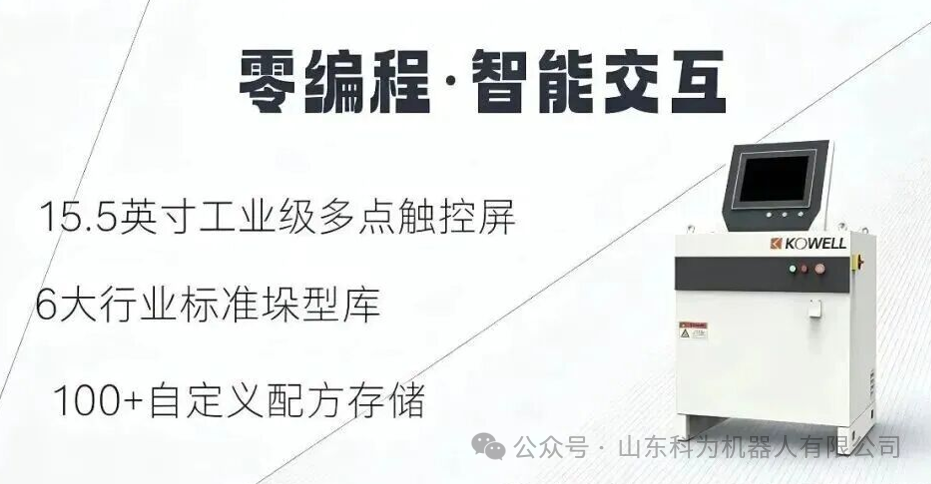
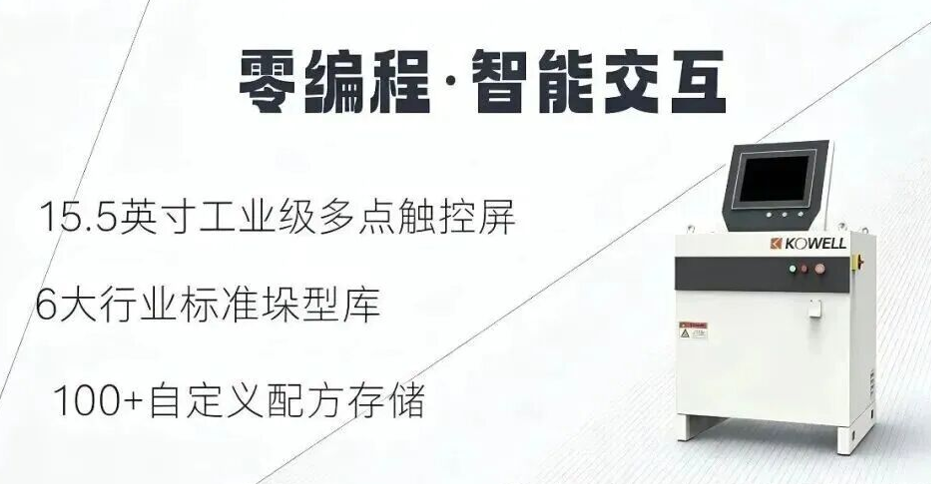
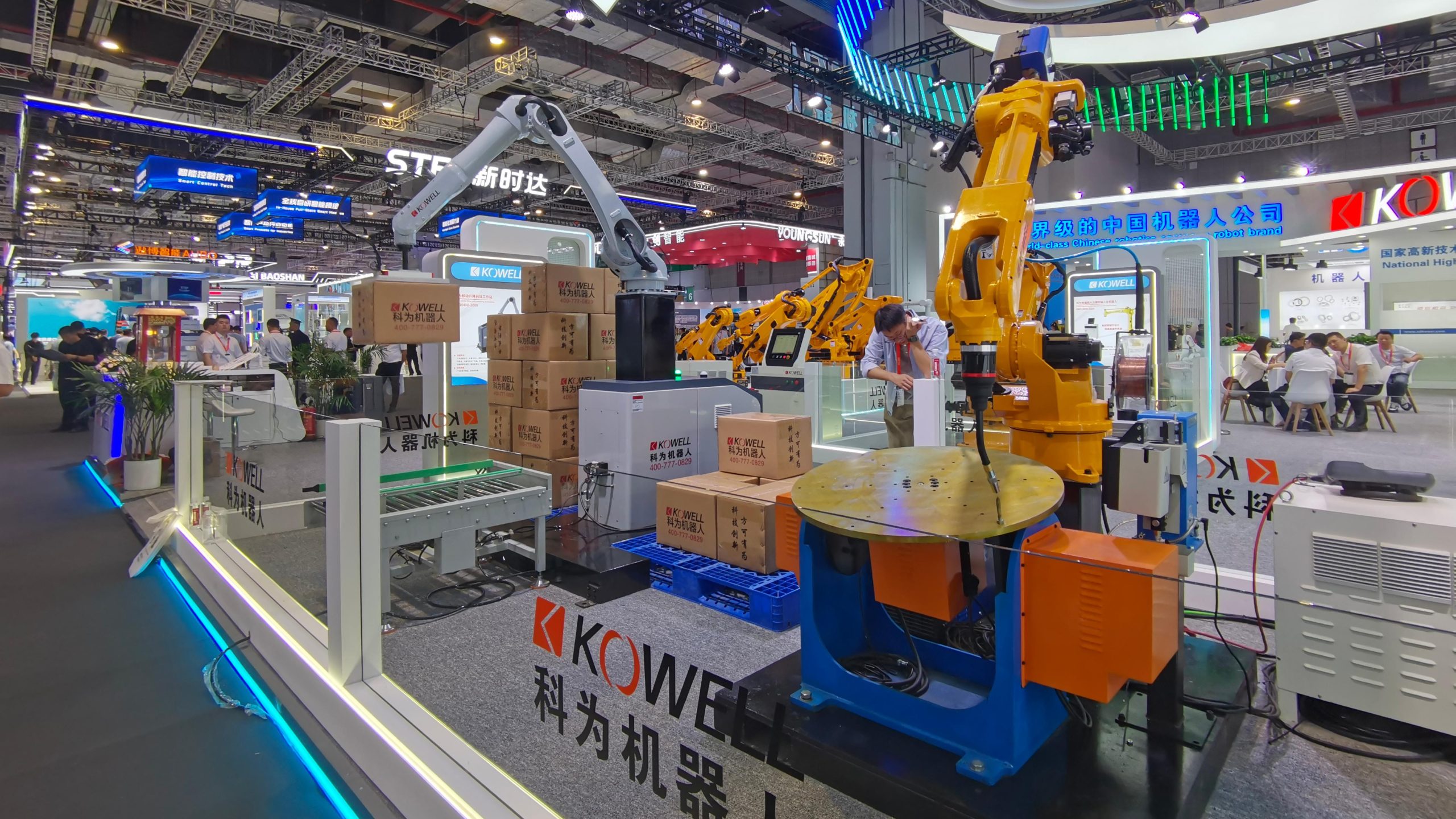
For palletizing applications, Kowell has developed the OPIS zero-programming palletizing interaction system to simplify the configuration of routine palletizing tasks. Through a touchscreen interface, operators can enter product parameters and adjust pallet patterns without needing extensive knowledge of robot programming.
The system also supports 3D pallet pattern previews and recipe storage, allowing operators to review stacking arrangements and reuse saved configurations for different production tasks.
Take the KW1180M-3200 heavy-duty palletizing robot as an example. With a payload capacity of 180 kg and a reach of 3,200 mm, it is designed for heavy-duty palletizing applications involving bagged and boxed materials. Combined with the OPIS interaction system, it provides a more straightforward way to configure routine palletizing operations.
By simplifying everyday task configuration, Kowell helps reduce the operating threshold and makes production changeovers less dependent on specialized programming personnel.
2. A Modular Robot Portfolio for Diverse Production Requirements
Different manufacturing processes have different requirements for payload, working range, motion flexibility, and installation space. No single robot model can meet every application requirement, making the right equipment selection essential.
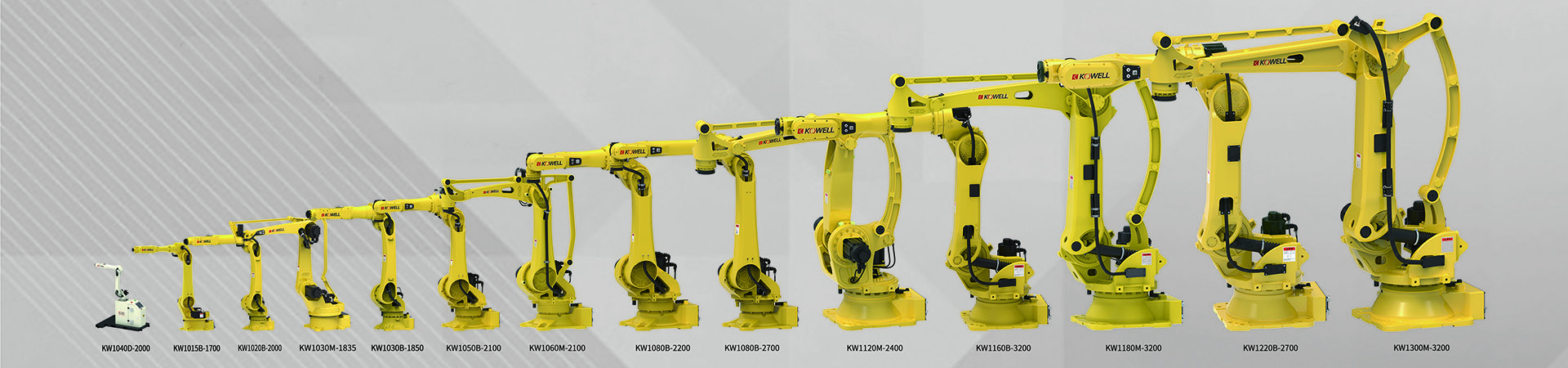
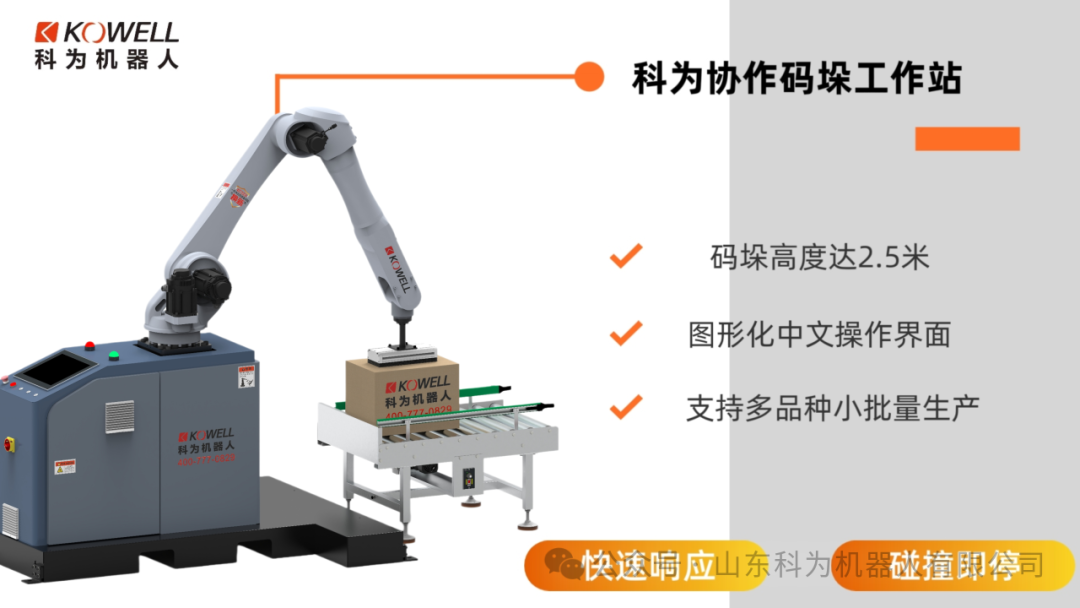
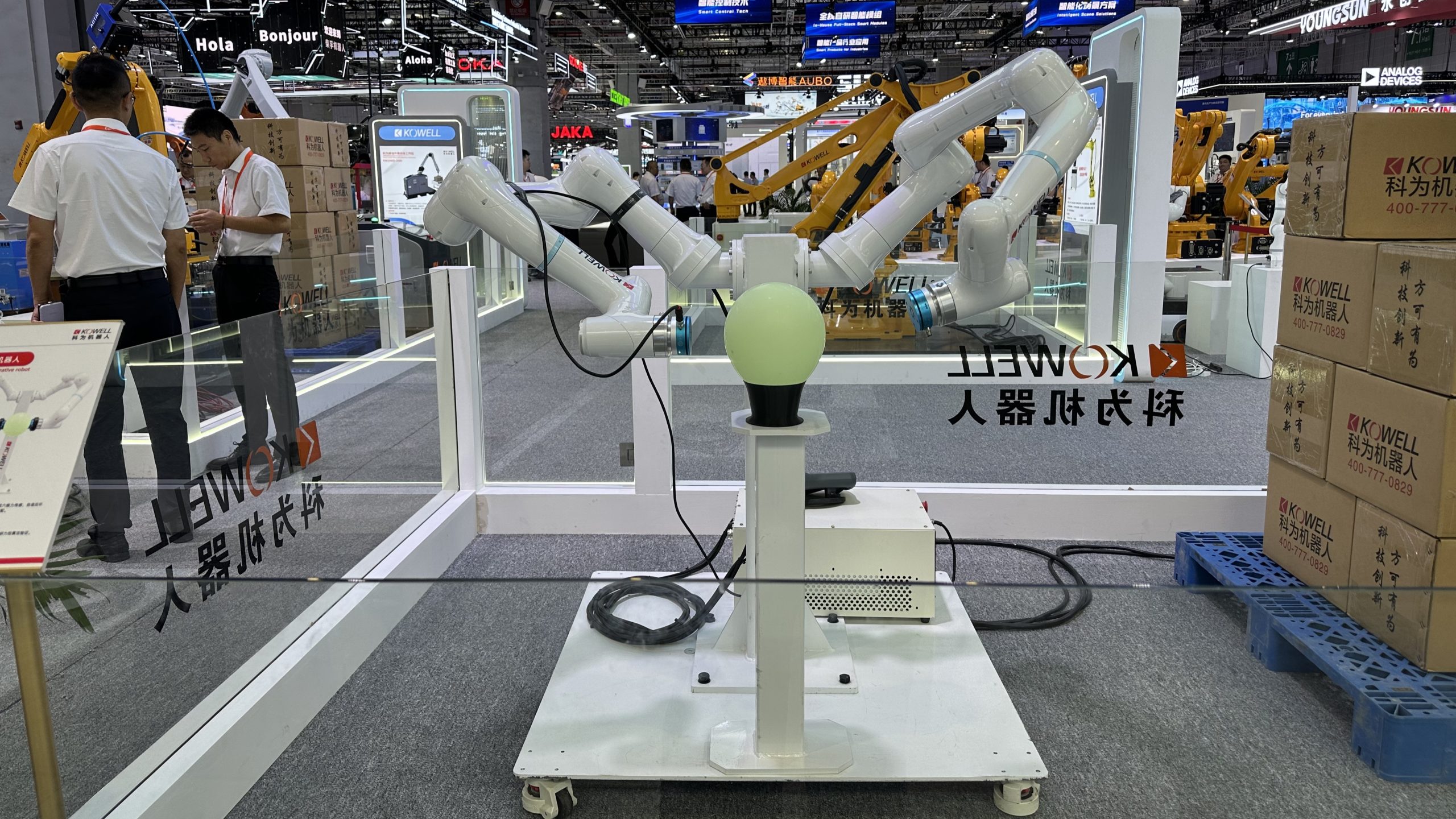
Kowell offers a range of four-axis industrial robots, six-axis industrial robots, and collaborative robots covering different payload capacities and working ranges. These product series support applications such as palletizing, material handling, and machine tending.
Heavy-duty palletizing robots: Designed for palletizing bagged and boxed materials, combining high payload capacity with a suitable working range for demanding end-of-line operations.
Four-axis industrial robots: Suitable for palletizing and selected repetitive handling tasks, with models available for different payload and reach requirements.
Six-axis industrial robots: Offer greater motion flexibility and are suitable for applications such as component handling and machine tending that require multi-directional movement.
Collaborative robots: Designed for applications where workspace utilization and human-robot collaboration are important, with configurations selected according to specific payload and process requirements.
With different robot series available, manufacturers can select equipment according to their production tasks, facility layout, and actual payload requirements, rather than forcing their existing processes to accommodate a single fixed configuration.
3. Application Adaptability for Better Production Line Integration
Automation is not simply a matter of placing a robot inside a factory. The robot arm is only one part of an automated system. Successful implementation also requires consideration of workpiece characteristics, gripping methods, equipment signals, and surrounding production processes.
Depending on project requirements, Kowell robots can work with grippers, end effectors, vision systems, PLCs, and peripheral equipment. System integrators and project partners can configure and integrate these components to meet the requirements of specific applications.
For example, in palletizing applications, the gripping method needs to be selected according to product dimensions, weight, packaging type, and pallet layout. In machine tending applications, factors such as robot reach, workpiece positioning, and signal coordination with the machine tool must also be considered.
By selecting the robot arm, controller, and complementary equipment according to actual operating conditions, manufacturers can avoid relying on one-size-fits-all configurations and develop automation solutions that better match their production requirements.
02. Flexibility First: A Sustainable Approach to Smart Manufacturing
In the short term, automation can help manufacturers address labor shortages, stabilize production cycles, and reduce repetitive manual work. Over the longer term, as product requirements and order structures continue to change, flexibility and adaptability will become increasingly important to manufacturing operations.
In the past, some manufacturers focused too heavily on brand reputation and equipment specifications when planning automation projects. While equipment performance matters, factors such as order structure, factory layout, operator capabilities, and actual process requirements are equally important.
The real value of automation does not come from making equipment as complex as possible. It comes from choosing solutions that address specific production challenges.
Industrial robots should not simply be technology showcases on the factory floor. They should be practical production tools that integrate into manufacturing processes, can be operated effectively by personnel, and perform useful tasks consistently.
For manufacturers, automation upgrades do not always have to involve transforming an entire production line at once. A more practical approach is to begin with repetitive operations where automation needs are clear, such as palletizing, material handling, and machine tending, then gradually expand automation as production requirements evolve.
Kowell Robot will continue to optimize its industrial robot arms, control systems, and application capabilities, providing manufacturers with more flexible robot options for different production environments.
Let equipment adapt to production, and let automation deliver real manufacturing value. An automation investment creates lasting value when it translates into practical production capabilities.
Online Consultation
Hello, the current customer service is offline. You can leave your contact information and the staff will respond to you as soon as possible!