
As more manufacturers invest in factory automation, choosing the right industrial robot has become an important decision. One of the most common questions is: Should you choose a 4 axis robot or a 6 axis robot?
Selecting a robot with more degrees of freedom does not always deliver better results. An oversized solution may increase investment costs and reduce equipment utilization, while a robot with limited flexibility may not meet the needs of modern production lines. Understanding the differences between a 4 axis robot and a 6 axis robot is essential for building an efficient and cost-effective automation system.
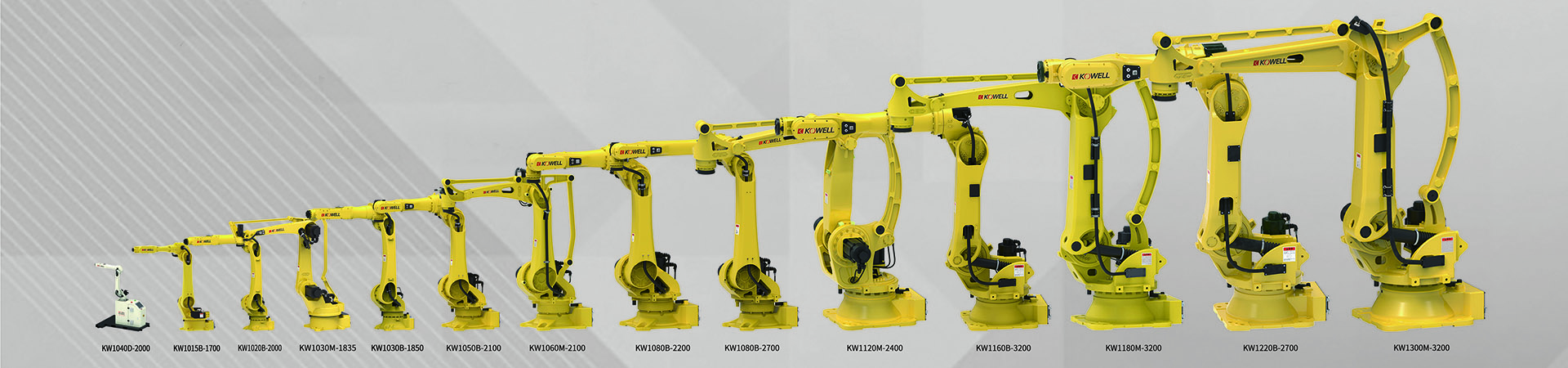
Shandong Kewei offers a complete portfolio of four-axis and six-axis industrial robots designed for material handling, palletizing, machine tending, and flexible manufacturing applications, helping manufacturers choose solutions that best match their production requirements.
4 Axis Robot vs 6 Axis Robot: What Is the Difference?
The primary difference between a 4 axis robot and a 6 axis robot lies in the number of motion axes, which directly affects flexibility, movement range, application scenarios, and production capabilities.
A 4 axis robot is typically designed for repetitive tasks with fixed movement paths, delivering high speed and stable performance. In contrast, a 6 axis robot provides greater freedom of movement, making it suitable for complex trajectories, multi-angle operations, and flexible production environments.
When selecting an industrial robot, manufacturers should evaluate production processes, product diversity, cycle time requirements, and future expansion plans rather than simply choosing a robot based on the number of axes.
4 Axis Robot: An Efficient Solution for Standardized Production
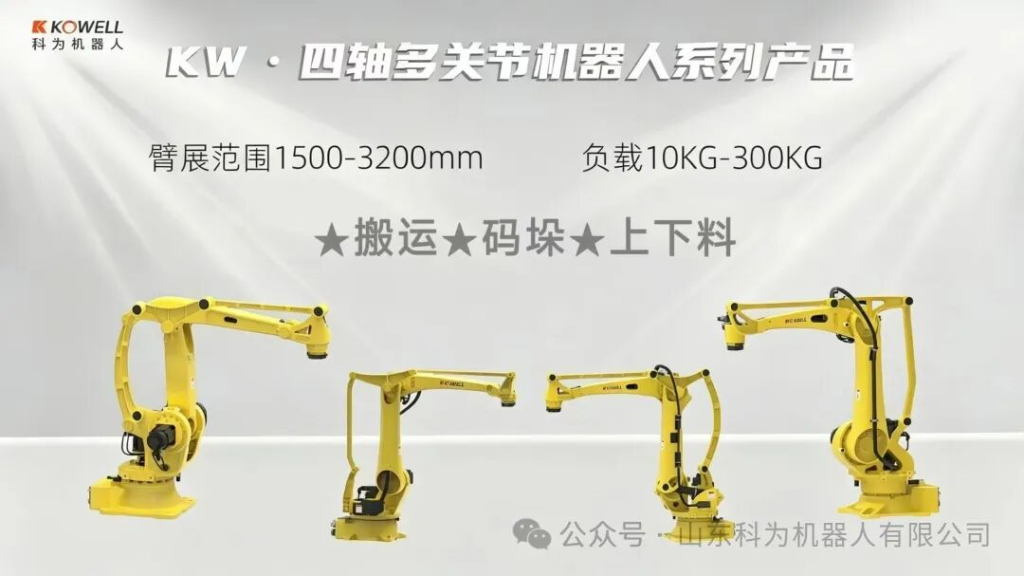
A 4 axis robot combines a rigid mechanical structure with fast cycle times and stable operation, making it an ideal choice for high-volume manufacturing environments.
Its simplified motion control enables rapid positioning and repeatable performance for applications such as material handling, palletizing, loading and unloading, sorting, and product transfer. Industries including food packaging, building materials, consumer goods, and metal fabrication widely adopt this type of automation.
High-Speed Model for Lightweight Applications
The KW1030M-1835 offers a payload capacity of 30 kg with a reach of 1835 mm, making it suitable for electronics manufacturing, food packaging, and lightweight material handling. Its compact design supports efficient operation in production lines with limited installation space.
Versatile Model for General Manufacturing
The KW1060M-2100 features a 60 kg payload and is designed for routine material handling, palletizing, and machine tending in industries such as hardware manufacturing, construction materials, and light industrial production. Stable long-term operation makes it a practical solution for continuous manufacturing.
Zero-Programming Solution for Heavy-Duty Palletizing
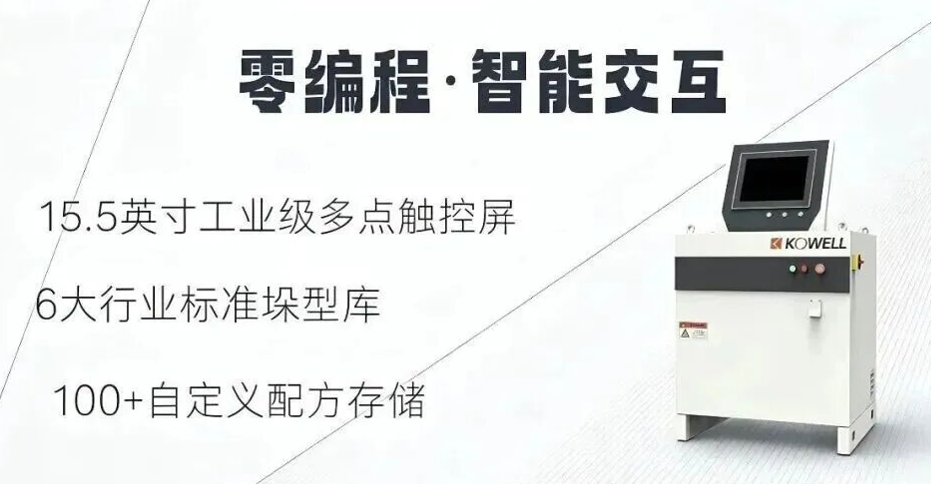
For warehouse automation and heavy-load palletizing, the KW1180M-3200 introduces a visual control platform powered by Kewei's proprietary OPIS operating system. This zero-programming robot allows operators to configure pallet patterns through a graphical interface instead of traditional coding, reducing setup time and improving production flexibility for frequent product changeovers.
6 Axis Robot: Greater Flexibility for Complex Manufacturing Processes
Compared with four-axis systems, a 6 axis robot offers six degrees of freedom that enable complex spatial movements similar to the motion of a human arm. It can perform tilting, rotating, wrapping, and curved-path operations that are difficult to achieve with standard automation equipment.
This flexibility makes six-axis robots ideal for automotive manufacturing, metal processing, precision assembly, machine tending, and applications involving irregular workpieces or multiple operation angles.
High-Precision Automation Solution
The KW1130B-3200 provides a payload of 130 kg with repeatability up to ±0.06 mm. It supports complex material handling, palletizing, and loading applications where positioning accuracy and flexible movement are critical.
Heavy-Duty Robot for Multi-Industry Applications
The KW1220B-3200 combines a payload capacity of 220 kg with the flexibility of six-axis motion. It is designed for handling large components, heavy machinery parts, and industrial assemblies in engineering equipment manufacturing, steel fabrication, and heavy industry.
Should You Choose a 4 Axis Robot or a 6 Axis Robot?
Many companies assume that more axes automatically mean better performance. In reality, the best solution depends on production requirements.
For standardized manufacturing with repetitive operations and fixed product specifications, a 4 axis robot offers higher efficiency and lower operating costs. For manufacturers handling multiple product types, complex processes, or frequent production changes, a 6 axis robot provides greater flexibility and adaptability.
The key to successful factory automation is selecting equipment that matches the actual production environment rather than focusing solely on technical specifications.
4 Axis and 6 Axis Robots Together Support Smart Manufacturing
As manufacturing continues to evolve toward intelligent automation, both four-axis and six-axis robots play essential roles in modern factories. High-speed standardized production and flexible intelligent manufacturing are complementary rather than competing concepts.
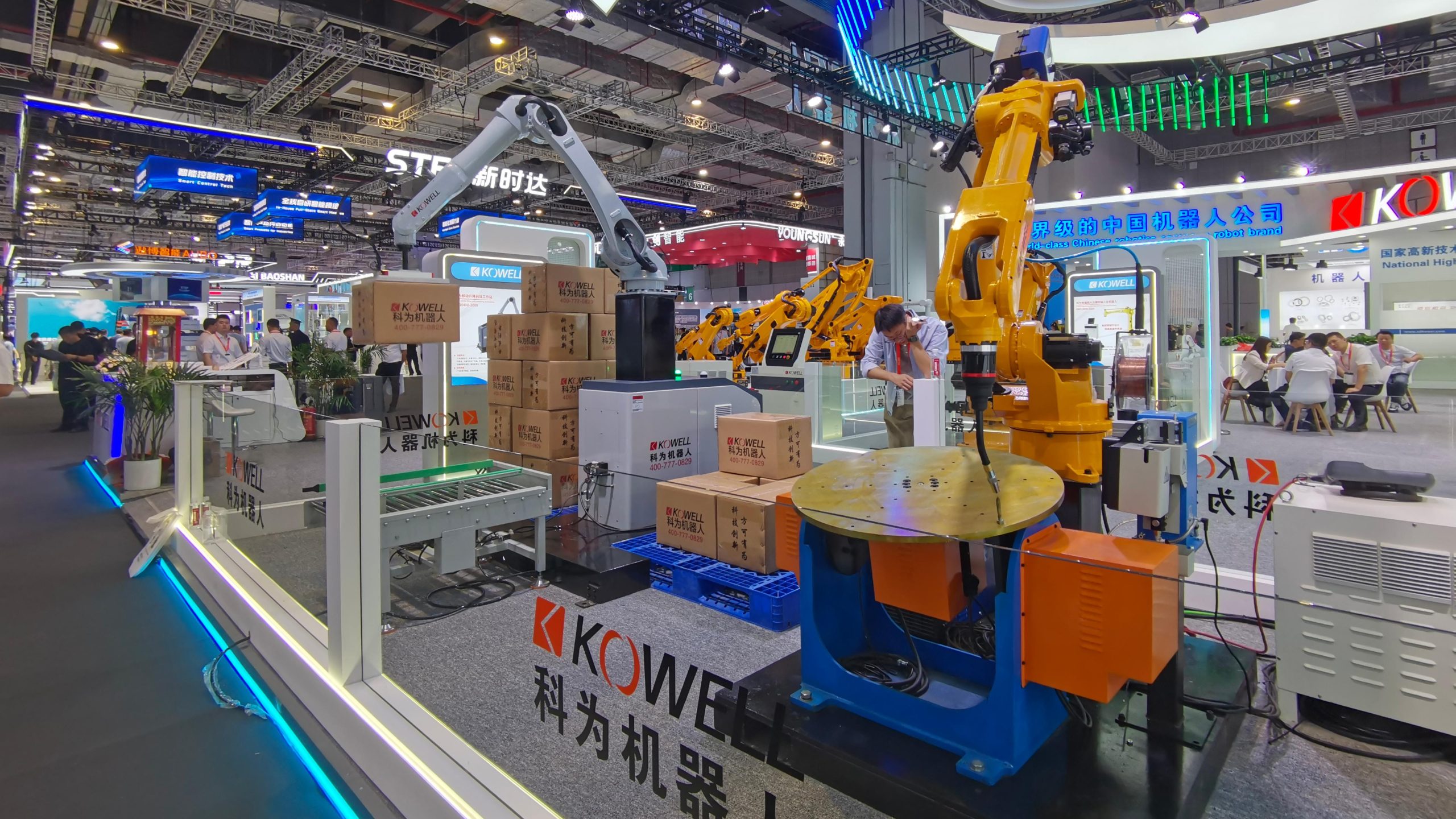
By offering a complete portfolio of industrial robots, Shandong Kewei helps manufacturers build automation solutions tailored to their specific production needs. Through continuous innovation in robot technology and intelligent control systems, the company supports businesses in improving productivity, enhancing manufacturing flexibility, and accelerating their transition toward smart manufacturing.
Online Consultation
Hello, the current customer service is offline. You can leave your contact information and the staff will respond to you as soon as possible!