
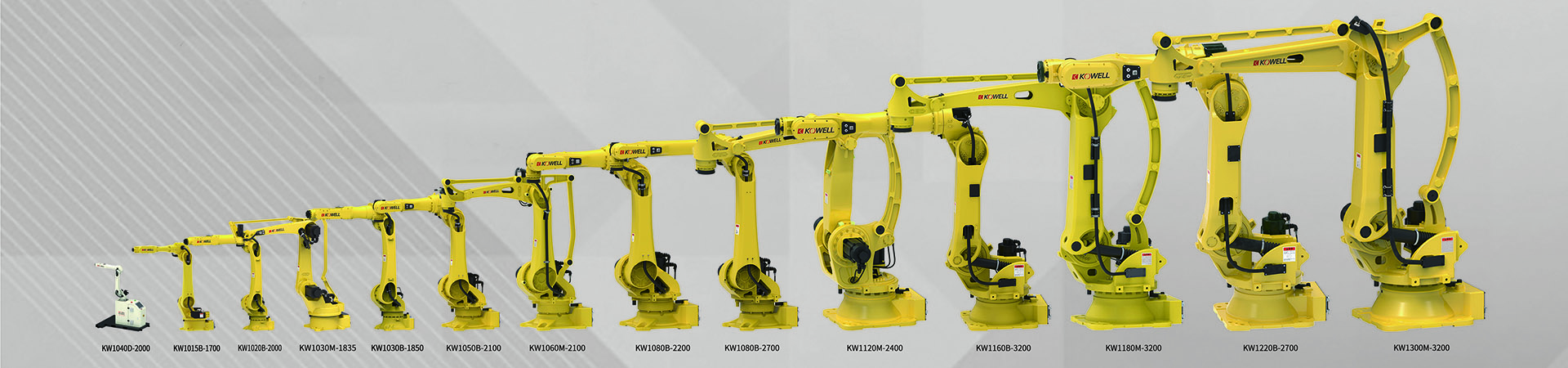
As manufacturers continue to accelerate their digital transformation, more companies are adopting industrial robot solutions to improve productivity, product quality, and operational efficiency. However, many factories still face common challenges, including inconsistent product quality, lengthy production line changeovers, equipment downtime in demanding environments, and rising labor costs.
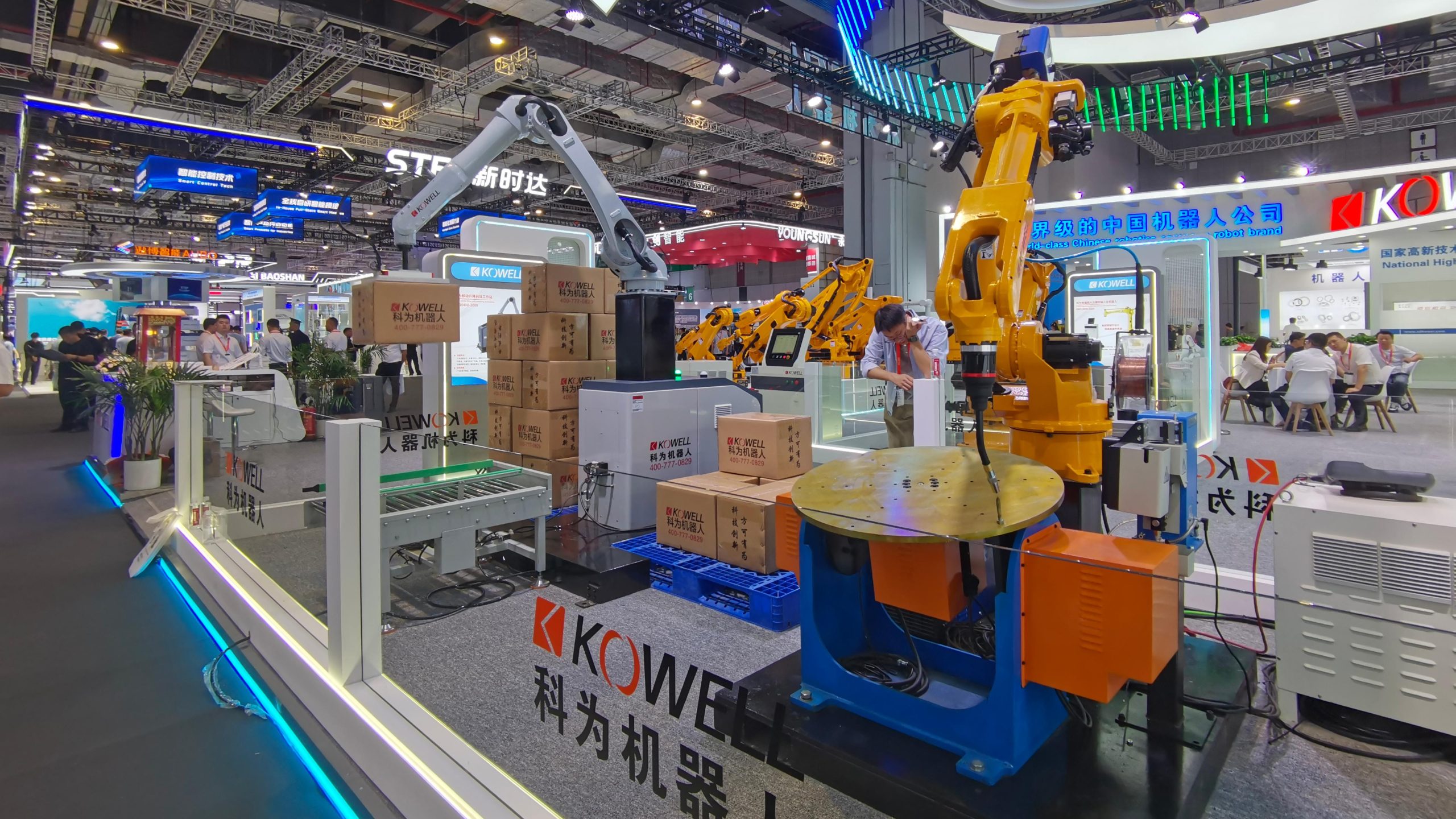
To address these challenges, Kewei Robotics has developed a comprehensive portfolio of palletizing robots, welding robots, and material handling robots. Designed for a wide range of manufacturing applications, Kewei's industrial robot solutions help both small and large manufacturers automate production processes, increase flexibility, and accelerate their transition toward smart manufacturing.
Flexible Palletizing Robots for Efficient Automated Production
Zero-Programming Operation Simplifies Automation
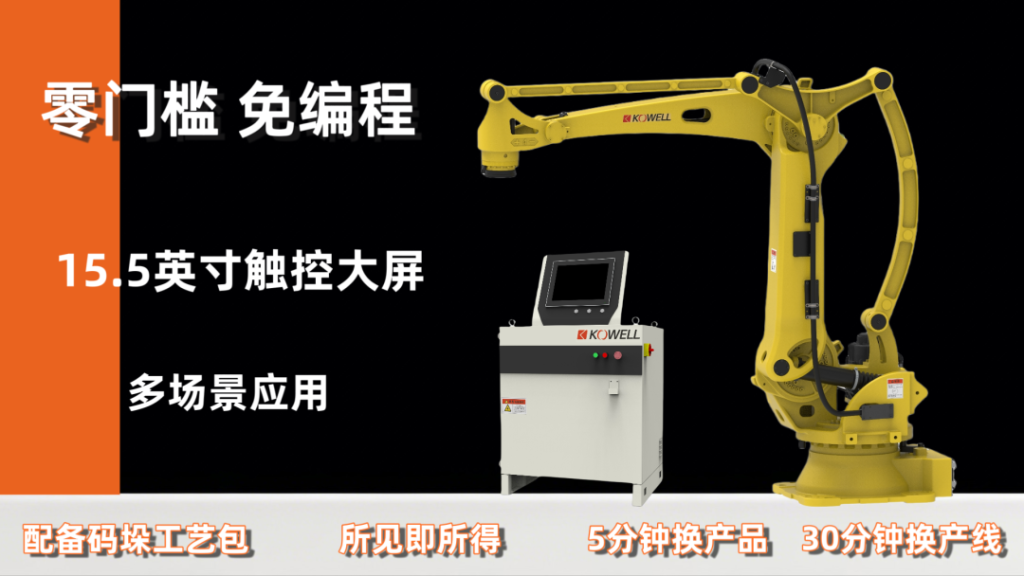
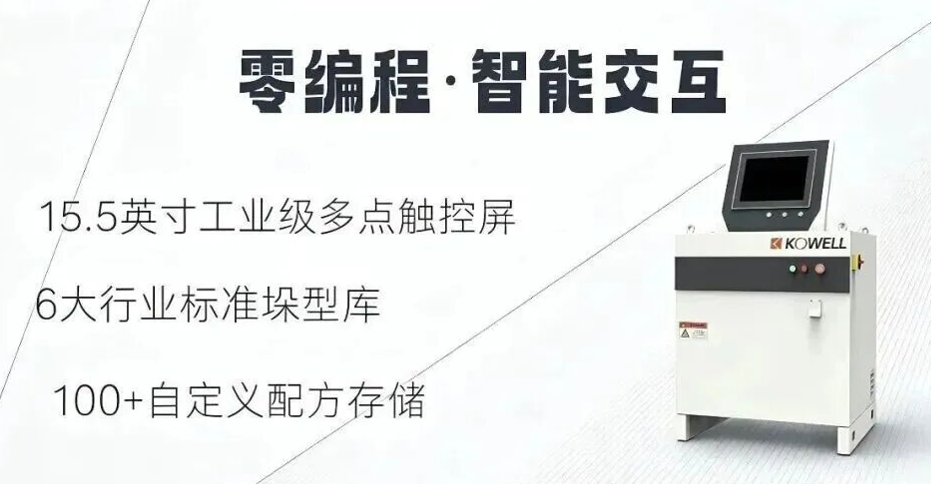
Kewei palletizing robots feature the self-developed OPIS intelligent operating system with a 15.5-inch industrial touchscreen. The graphical interface eliminates the need for complex programming, allowing operators to create pallet patterns and production tasks using simple drag-and-drop functions.
This intuitive operation significantly reduces commissioning time, shortens product changeovers, and enables manufacturers to respond more quickly to high-mix, low-volume production requirements.
Multi-Level Safety Protection for Stable Operation
The system incorporates multiple layers of safety protection, including emergency stop functions and a 16-channel safety I/O architecture. These features help ensure safe human-machine collaboration while maintaining stable operation during continuous production.
Welding Robots Deliver Higher Quality and Consistency
Durable Design for Demanding Welding Environments
Kewei welding robots are built with a high-rigidity structure and enhanced protection against welding spatter, dust, and moisture, making them suitable for long-term operation in demanding industrial environments while reducing maintenance requirements.
Compatible with Multiple Welding Processes
The robots support MIG welding, TIG welding, laser welding, and other common welding processes for carbon steel, stainless steel, and additional materials. High-precision motion control enables consistent straight-line, circular, and complex three-dimensional weld paths, helping improve weld quality and production consistency.
Material Handling Robots Keep Production Running Efficiently
High-Rigidity Structure for Heavy-Duty Handling
Kewei material handling robots utilize a rigid mechanical structure, precision RV reducers, and high-performance servo systems to deliver stable heavy-load handling and accurate positioning. This helps manufacturers improve loading and unloading efficiency while maintaining continuous production.
Flexible Integration Across Multiple Applications
The robots support customized end-of-arm tooling, including vacuum suction cups and mechanical grippers, making them suitable for cartons, bags, drums, panels, and various industrial workpieces. Their flexibility allows manufacturers in industries such as food processing, chemicals, building materials, and metal fabrication to improve production efficiency and automation.
Industrial Robot Solutions Support Smart Manufacturing
As manufacturing continues to evolve, companies increasingly require complete automation systems rather than individual machines.
Kewei continues to expand its industrial robot solutions, covering palletizing, welding, and material handling applications while continuously improving robot performance, intelligent control systems, and industry-specific automation solutions. By delivering reliable, flexible, and efficient robotic systems, Kewei helps manufacturers reduce operating costs, improve productivity, and accelerate their journey toward intelligent manufacturing.
Frequently Asked Questions (FAQ)
Q1: How long does it take for operators without programming experience to learn the basic operation?
A: Kewei's industrial robot solutions feature graphical user interfaces with Chinese touchscreens and handheld teaching pendants. Built-in application templates for palletizing, welding, and material handling eliminate the need for complex programming. Most operators can learn basic functions such as startup, parameter adjustment, and simple teaching within one day of training, while Kewei engineers handle system commissioning and advanced programming during installation.
Q2: Can operators without welding experience use a welding robot? Is the weld quality consistent?
A: Yes. Kewei welding robots use an intuitive teaching system that allows operators to record welding paths without advanced programming knowledge. After one to two days of basic training, operators can perform routine welding tasks. Precise control of welding current, voltage, travel speed, and weaving motion helps produce consistent welds while reducing common manual welding defects such as porosity, undercut, and weld spatter.
Q3: Which industries are Kewei's industrial robot solutions suitable for? Are there successful application cases?
A: Kewei's industrial robot solutions are widely used in food processing, animal feed, chemicals, building materials, pharmaceuticals, packaging, metal fabrication, steel structures, and panel manufacturing. The robots can handle bags, cartons, drums, panels, and structural components. Kewei has completed numerous automation projects across China and exports its products to more than 50 countries and regions, providing customers with proven industry applications and practical automation experience.
Online Consultation
Hello, the current customer service is offline. You can leave your contact information and the staff will respond to you as soon as possible!