
As manufacturing automation continues to advance, traditional manual palletizing is becoming a major challenge for many factories. Limited working efficiency, inconsistent stacking quality, rising labor costs, and difficulties in maintaining continuous production have pushed companies in industries such as food, daily chemicals, pharmaceuticals, and electronics to seek more reliable automation solutions.
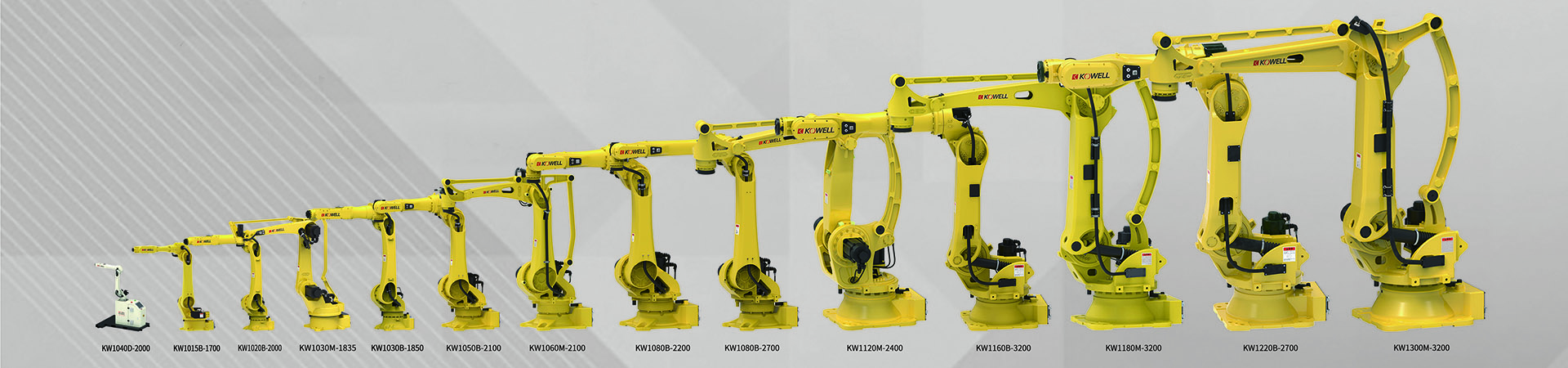
To meet the growing demand for industrial palletizing, Kewei Robotics developed the KW1120M-2400 Four Axis Palletizing Robot. Designed for high-frequency palletizing applications, this robot combines stable operation, efficient cycle performance, easy operation, and flexible adaptability to help manufacturers improve productivity, optimize production processes, and reduce long-term operating costs.
Why Is Manual Palletizing Becoming a Challenge for Modern Manufacturing?
Compared with automated solutions, traditional manual palletizing faces several limitations:
Limited production efficiency
Manual workers have physical limitations during long-term repetitive operations. In high-speed production lines, manual palletizing may cause product accumulation, production delays, and unstable output.
Inconsistent stacking quality
After continuous repetitive work, operator fatigue can lead to uneven stacking, tilted pallets, and inconsistent layer arrangements, affecting storage efficiency and transportation safety.
Increasing labor costs
Palletizing jobs are highly repetitive and physically demanding, making recruitment and workforce management increasingly difficult for many manufacturers.
Higher workplace safety risks
Handling heavy products and stacking materials at height may increase safety risks and create additional pressure on factory safety management.
Compared with manual operations, a Four Axis Palletizing Robot is especially suitable for fixed-path, high-frequency palletizing tasks due to its stable structure, fast cycle speed, and reliable performance. It has become widely used in industries including food processing, logistics, building materials, and packaging.
Key Advantages of KW1120M-2400 Four Axis Palletizing Robot
Large Working Radius for Flexible Palletizing Applications
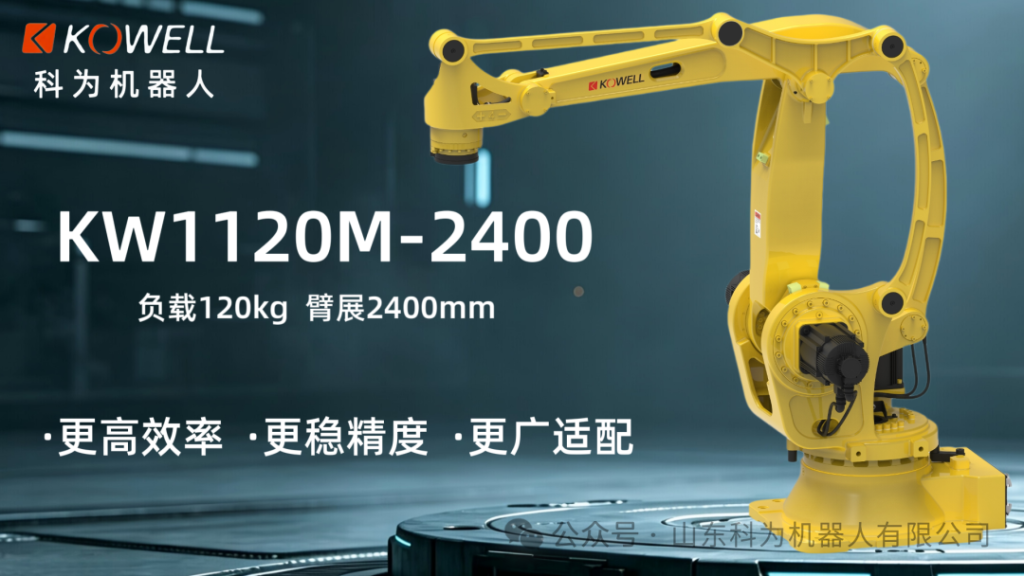
The KW1120M-2400 features a 2400mm working radius, providing a wide operating range for large cartons, heavy products, and multi-layer palletizing applications.
Its flexible working coverage allows manufacturers to optimize production line layouts, reduce equipment adjustment time, and improve overall operational efficiency.
High-Speed Operation Improves Production Efficiency
Equipped with intelligent palletizing technology, the robot provides optimized motion control and smooth trajectory planning.
It can continuously perform product picking, transferring, and stacking operations while maintaining stable performance in multi-product and small-batch production environments.
This helps factories improve production rhythm and achieve more consistent delivery performance.
Stable Structure for Long-Term Industrial Operation
The KW1120M-2400 adopts a high-rigidity mechanical structure combined with a high-performance servo system and precision reducer.
The optimized design ensures fast response, accurate movement, and stable operation during continuous production.
With an operating temperature range of 0°C to 45°C and an IP54 protection rating, the robot can adapt to common industrial environments involving dust and humidity, supporting reliable long-term operation.
Flexible Adaptation for Different Products and Industries
To meet different packaging requirements, the robot can be equipped with various end-of-arm tools, including vacuum grippers and mechanical grippers.
It can handle cartons, bags, drums, and other packaging formats, making it suitable for industries such as:
Food and beverage
Pharmaceutical packaging
Daily chemical products
3C electronics
Light manufacturing
Building materials
Whether for high-volume production of a single product or flexible manufacturing with multiple product types, the KW1120M-2400 provides a reliable automation solution.
Conclusion
With the continuous development of smart manufacturing, automated palletizing equipment has become an important solution for improving factory efficiency.
The KW1120M-2400 Four Axis Palletizing Robot combines productivity, reliability, and application flexibility to help manufacturers reduce dependence on manual labor, improve palletizing consistency, and optimize production costs.
Kewei Robotics continues to focus on industrial robot development and automation applications, providing efficient and reliable palletizing solutions for manufacturers worldwide.
Frequently Asked Questions (FAQ)
Q1: How do I choose the right palletizing robot? How should I determine the model, payload, and speed requirements?
A: The selection of a palletizing robot mainly depends on four factors:
① Product information: Including product weight, dimensions, and packaging type, such as cartons, bags, drums, or sheet materials. It is recommended to reserve 20%-30% payload capacity to avoid long-term operation under maximum load.
② Production requirements: Consider production capacity, palletizing cycles per hour, and required working speed.
③ Factory conditions: Evaluate available installation space, workshop height, floor load capacity, and existing conveyor layout.
④ Production mode: Determine whether the application requires continuous production of a single product or flexible production with multiple SKUs and small batches.
Kewei technical engineers can recommend suitable robot models and configurations based on actual production requirements.
Q2: Can operators without programming experience learn to operate the robot? How long does training take?
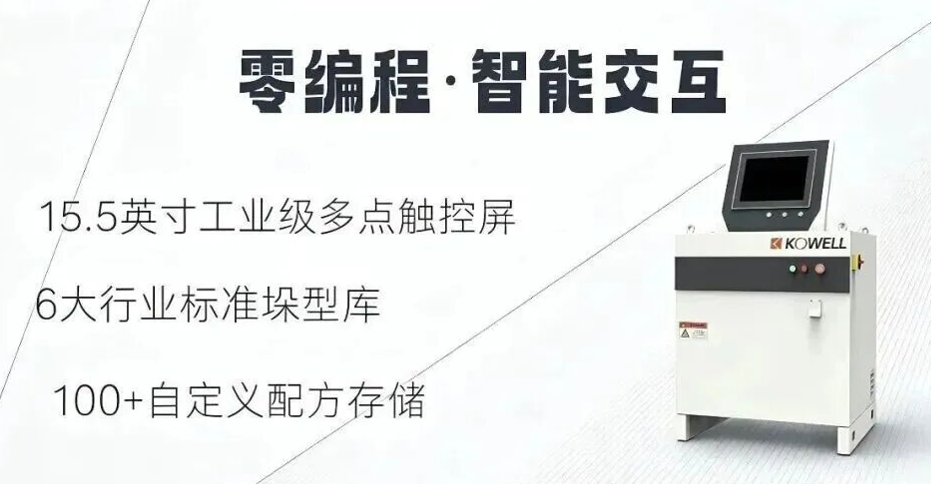
A: Yes. The KW1120M-2400 is equipped with a teaching pendant and graphical operation interface.
Operators do not need programming experience. They only need to set picking points, placing points, stacking layers, and basic operating parameters to complete standard palletizing tasks.
Normally, operators can learn basic operation, startup, teaching, and simple program adjustment within 1-2 days of training.
For complex processes or complete production line integration, Kewei engineers provide commissioning and delivery support.
Q3: Which industries can Kewei palletizing robots be applied to? Are there practical application cases?
A: Kewei palletizing robots are widely used in:
Food and beverage
Feed and grain processing
Daily chemical packaging
Pharmaceutical packaging
3C electronics
Building materials
Automotive components
Chemical and plastic industries
The robots can handle cartons, bags, drums, sheet materials, and various industrial products for palletizing, loading, unloading, and material handling applications.
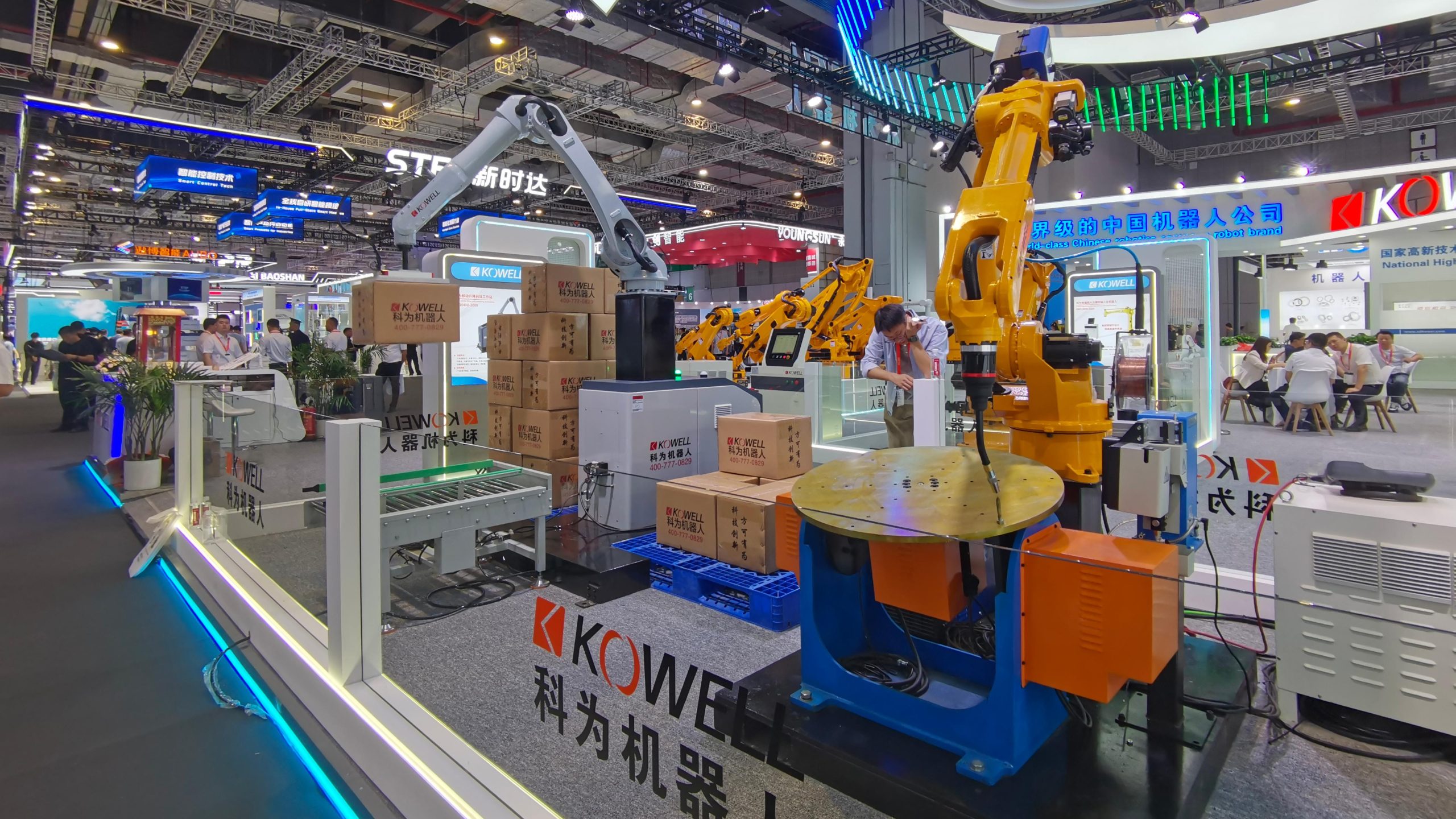
Kewei automation solutions have been successfully implemented in multiple regions and exported to international markets. Customers can also request application references and actual operating examples according to their industry requirements.
Online Consultation
Hello, the current customer service is offline. You can leave your contact information and the staff will respond to you as soon as possible!