
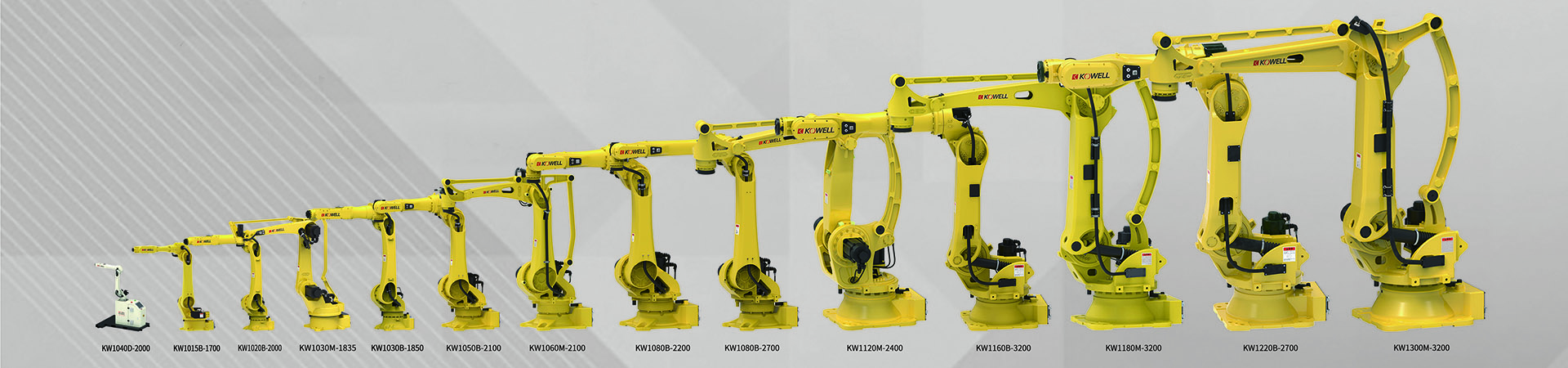
The 180 kg payload range is widely used in heavy-duty palletizing applications, covering material handling needs in industries such as building materials, chemicals, grain processing, and logistics.
In practical applications, heavy-duty palletizing robots often face challenges including complicated programming, slow production changeovers, unstable operation under heavy loads, and high maintenance costs. To address these industrial demands, Kewei Robotics developed the KW1180M-3200 heavy-duty palletizing robot, combining structural optimization, motion control, and simplified operation to improve both stability and usability.
As an industrial robot manufacturer, Kewei Robotics focuses on the independent development of mechanical structures and control systems, reducing operational complexity and improving practical application performance.
01 Algorithm Optimization: Enhancing Stability in Heavy-Duty Operation
Kewei integrates mechanical structure and motion control design to help the palletizing robot maintain stable performance during high-speed heavy-load operation.
• High-Rigidity Structure and Vibration Control
The robot adopts a high-strength structural design with an optimized transmission system. Combined with vibration control algorithms, the palletizing robot maintains stable operation under a 180 kg payload, with repeat positioning accuracy up to ±0.2 mm.
• Dynamic Trajectory and Load Adaptation
The system automatically adjusts motion trajectories according to payload changes and robotic arm position, helping reduce sudden stops and sharp directional changes while improving operational efficiency.
• Reliability Testing
Before delivery, each palletizing robot undergoes operational testing, assembly inspection, and continuous running verification to support long-term industrial use.
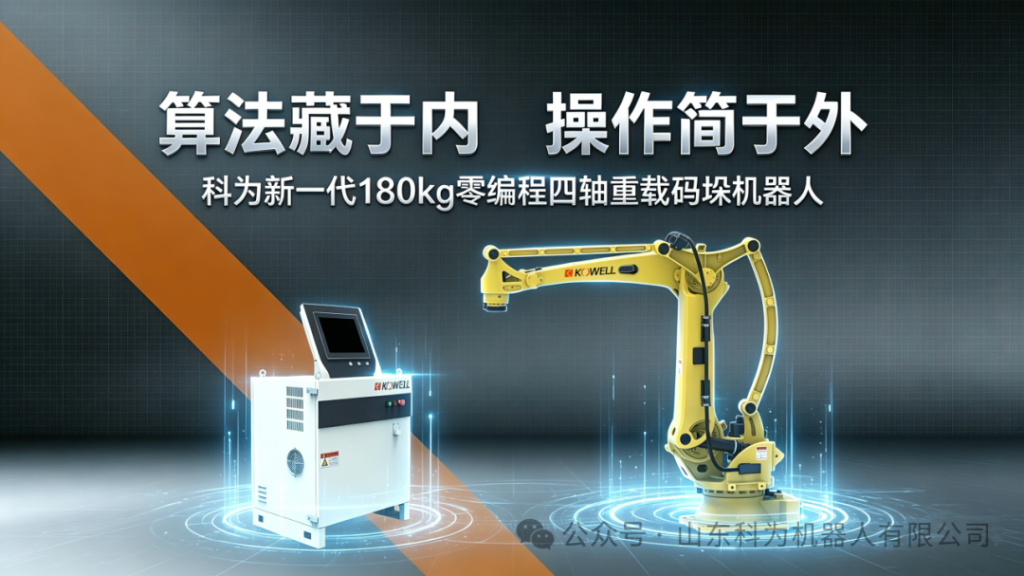
02 Zero-Programming System: Simplifying Robot Operation
The KW1180M-3200 palletizing robot uses a graphical operating system that reduces complex programming steps and improves deployment efficiency.
• Industrial Touchscreen Interface
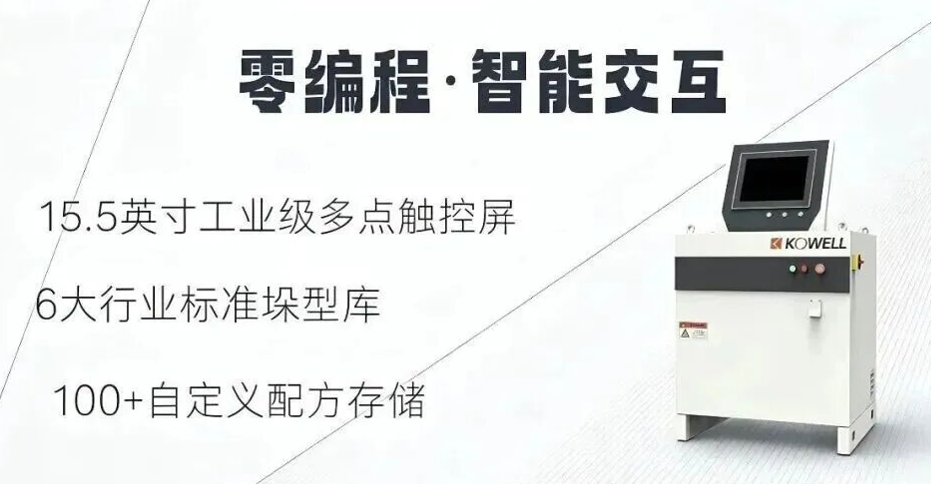
The system is equipped with a 15.5-inch industrial touchscreen, allowing operators to complete setup through a graphical interface without complex code input.
• Simplified Parameter Configuration
Traditional complex settings are simplified into basic parameters such as product size, layer quantity, arrangement pattern, spacing, payload weight, and operating speed.
• 3D Pallet Pattern Preview
Operators can build pallet patterns through drag-and-drop interaction with real-time 3D visualization for quick adjustment and confirmation.
• Standard Palletizing Templates
The system includes preset pallet patterns commonly used in food, building materials, chemical, grain, and logistics industries.
• Recipe Storage and Fast Switching
Multiple operating parameters can be stored and recalled quickly, helping reduce production changeover time.
• Fast Training and Easy Operation
Operators can complete daily operation and product switching after basic training, improving equipment usability in factory environments.
03 Application Value: Improving Efficiency and Flexible Production
In industrial production, the heavy-duty palletizing robot can be applied to repetitive material handling and palletizing tasks.
Through automation, manufacturers can:
Improve palletizing efficienc
Reduce manual labor involvement
Maintain pallet consistency
Shorten production changeover time
Optimize production workflow
The zero-programming operating method also helps lower the barrier to automation, making the palletizing robot more suitable for flexible manufacturing environments.
Conclusion
The value of industrial robots lies not only in automation capability, but also in operational efficiency and practical usability.
The Kewei KW1180M-3200 heavy-duty palletizing robot combines structural optimization, motion control, and a graphical operating system to help manufacturers improve palletizing automation and achieve more stable material handling operations.
Online Consultation
Hello, the current customer service is offline. You can leave your contact information and the staff will respond to you as soon as possible!