
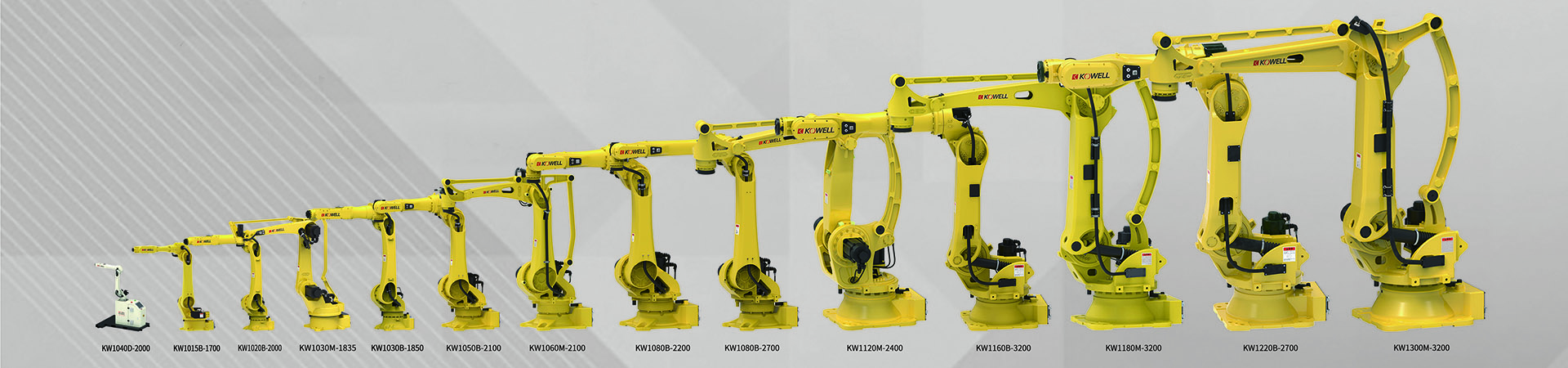
As manufacturing moves toward higher levels of automation and intelligence, the requirements for industrial robots are evolving from simply “replacing manual labor” to achieving greater flexibility, precision, and adaptability. With six degrees of freedom, a 6-axis industrial robot can replicate the movement of a human arm, enabling complex operations from multiple angles and directions. This makes it widely applicable to material handling, palletizing, welding, machine tending, assembly, and other industrial applications.
However, choosing an industrial robot is not simply about selecting the largest or most powerful model. Different production environments require different payload capacities, working ranges, precision levels, and end-of-arm tooling. Shandong Kewei Robot has developed a comprehensive range of 6-axis robots covering applications from lightweight precision operations and medium-payload production to heavy-duty industrial tasks, helping manufacturers select the right solution for their specific production needs.
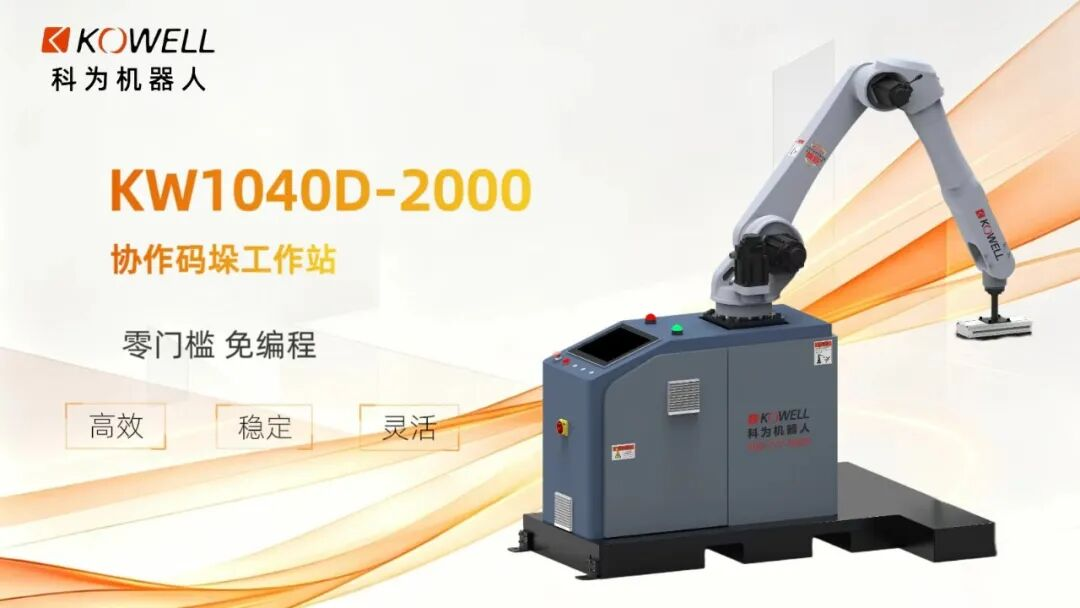
Small-Payload 6-Axis Robots: Precise and Flexible for Compact Workstations
Designed for applications such as 3C electronics and precision component processing, Kewei's small-payload 6-axis robots focus on lightweight construction, high flexibility, and precision. They are particularly suitable for production environments with limited space and densely arranged workstations.
High Flexibility
Featuring a six-degree-of-freedom joint structure, the robot can replicate human arm movements and perform operations from multiple angles and directions. This makes it suitable for precision tasks in confined workspaces.
Compact Design
The compact structural design reduces the robot's overall footprint while supporting multiple installation configurations. It can adapt to space-constrained production lines and provide greater flexibility for factory layout planning.
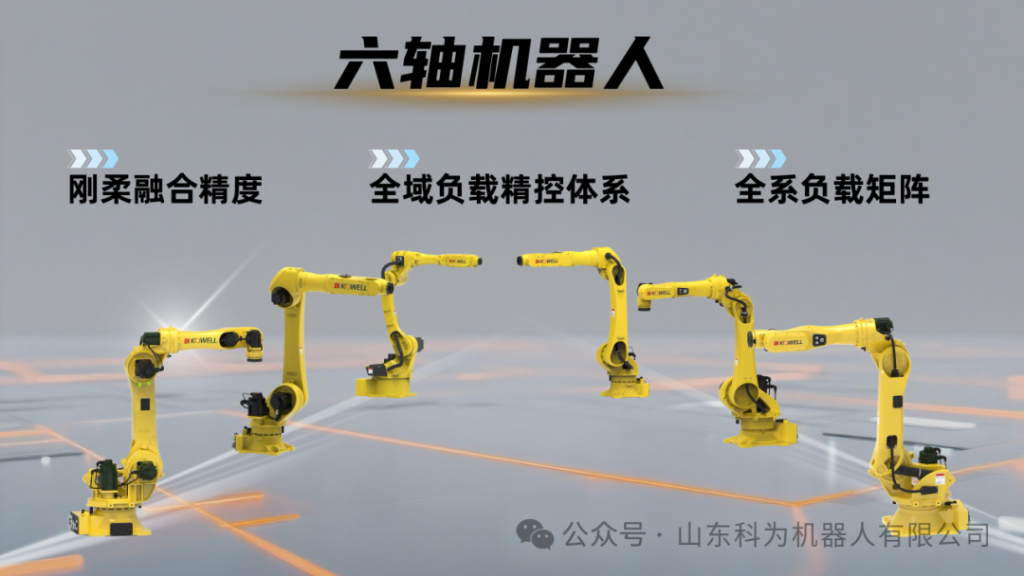
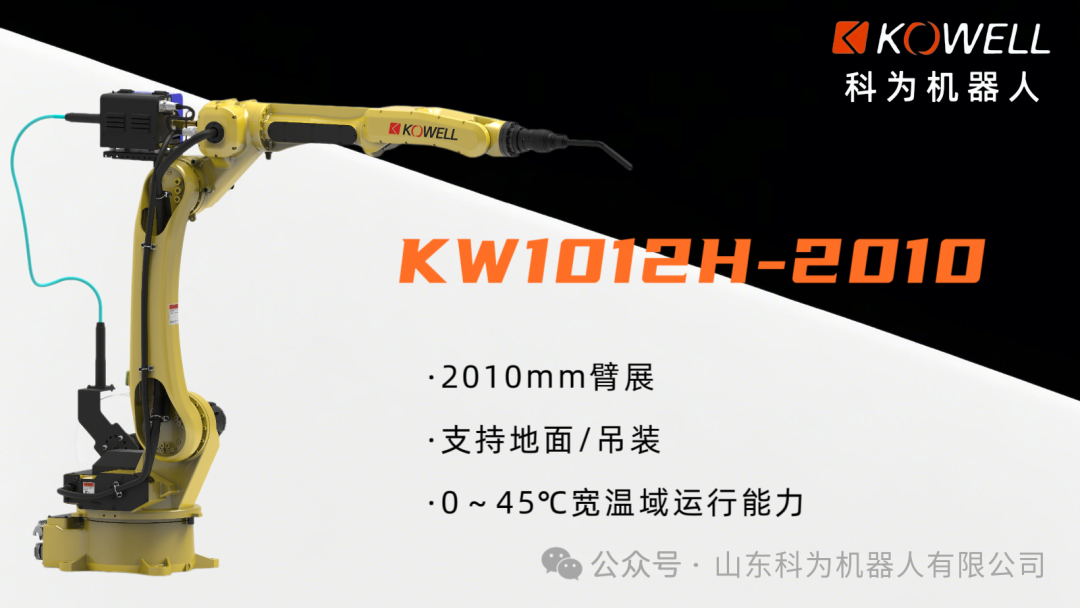
Medium-Payload 6-Axis Robots: Stable and Efficient for General Manufacturing
As versatile equipment for industrial automation, medium-payload 6-axis robots are mainly designed for material handling, palletizing, workpiece transfer, machine tending, and other high-frequency production tasks. With a balanced combination of payload capacity, flexibility, and operating efficiency, they are an ideal choice for many manufacturing applications.
Efficient and Smooth Operation
Equipped with high-performance servo drive systems, the robot enables coordinated and continuous movements throughout the entire process, from picking and transferring to positioning. Smooth motion control helps improve production cycle times and overall operational efficiency.
Flexible Handling of Different Materials
The robot can be equipped with different end-of-arm tools, including vacuum grippers and mechanical grippers, depending on the application. It can handle cartons, bags, drums, and various workpieces, allowing one robot to perform multiple production tasks.
Stable Operation Across a Wide Temperature Range
The robot can operate reliably in environments ranging from 0°C to 45°C. Combined with a high protection rating, it can adapt to common industrial conditions involving dust, moisture, and other environmental challenges.
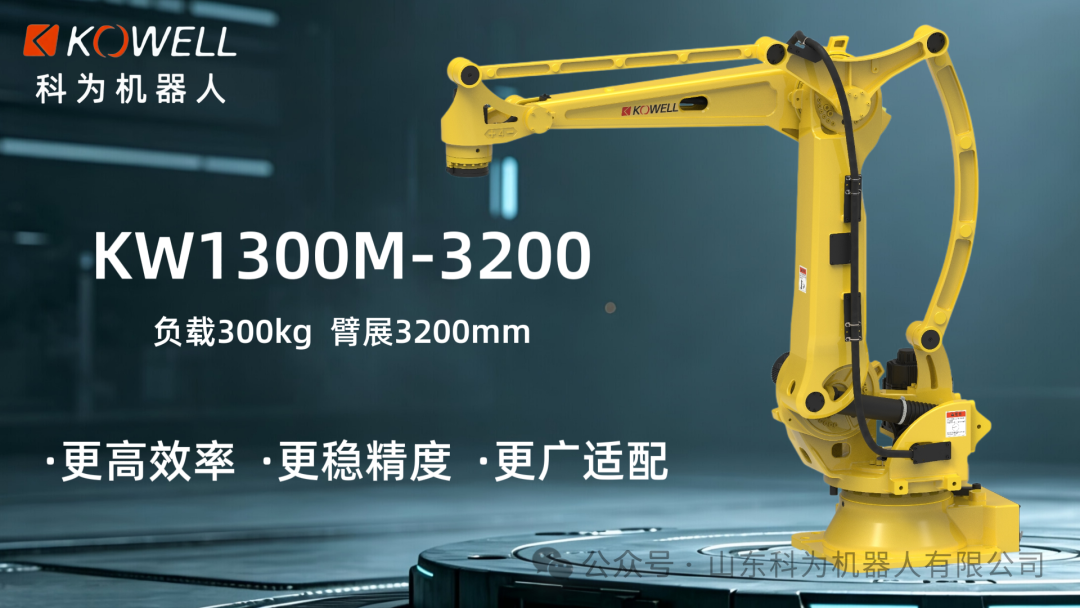
Heavy-Payload 6-Axis Robots: Powerful Performance for Demanding Applications
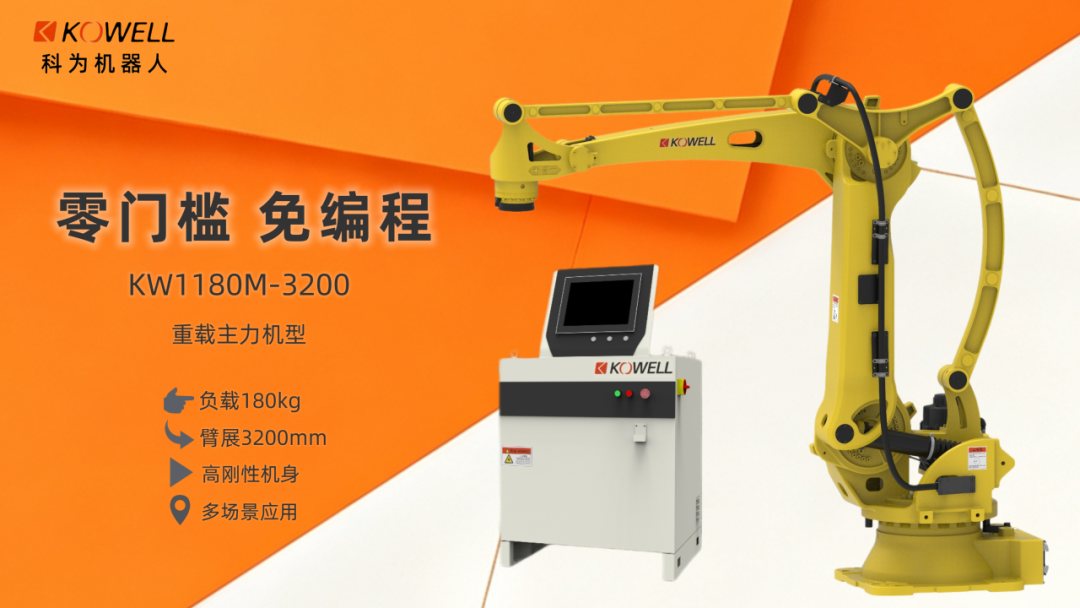
For industries such as building materials, chemicals, logistics, warehousing, and heavy manufacturing, large materials and heavy loads often require robots with greater structural strength, driving power, and working range. Kewei's heavy-payload 6-axis robots are designed to handle demanding applications including heavy material handling, palletizing, and machine tending.
Powerful Driving Capability
Featuring high-performance servo systems and a high-rigidity body structure, the robots maintain stable motion performance during heavy-load operations. They are suitable for demanding applications involving large workpieces, heavy materials, and high-frequency repetitive tasks.
Large Working Envelope
Some heavy-payload models offer a working radius of up to 3,200 mm, providing a wider operating range for large production lines and spacious workstations. This helps reduce manual involvement and improves automation for heavy-duty, repetitive, and high-intensity operations.
Choosing a 6-Axis Industrial Robot: It's Not About "Bigger Is Better"
From precision electronics to heavy-duty palletizing, and from compact workstations to large production lines, different applications require different combinations of payload, working range, precision, and end-of-arm tooling.
When selecting a 6-axis industrial robot, manufacturers should consider several key factors, including material weight, required working range, production cycle time, available floor space, and production flexibility. Choosing a robot that matches the actual application can help avoid both over-specification and insufficient performance, allowing the automation system to deliver its full value.
Shandong Kewei Robot continues to expand its range of 6-axis robots based on real-world industrial applications, providing flexible equipment options for different payload requirements, production processes, and operating environments.
In the future, Kewei will continue to focus on industrial robot technology development and application, delivering robots with higher performance, greater adaptability, and improved reliability to help manufacturers accelerate automation, digitalization, and flexible production upgrades.
Frequently Asked Questions (FAQ)
Q1: Can operators with no computer or programming experience learn to operate the robot? How long does it take?
A: Kewei's robot systems are equipped with Chinese-language touchscreens and teach pendants. Applications such as palletizing, packaging, and welding can be supported by industry-specific process templates, reducing the need for operators to master complex programming.
For basic operations such as starting and stopping the equipment, adjusting parameters, and teaching simple positions, operators with no prior experience can quickly become familiar with the system after basic training. Complex programs and overall production-line logic are handled by Kewei engineers during on-site commissioning and delivery. Afterward, routine production and product changeovers can generally be handled by the customer's own operators, reducing long-term dependence on specialized technical personnel.
Q2: Is it difficult to modify the program when changing product specifications, such as cartons, packaging bags, or workpiece dimensions?
A: For products within the same category, changes in specifications can generally be made directly through the human-machine interface by adjusting parameters such as length, width, height, weight, stacking layers, and operating speed. Basic configuration changes can usually be completed within a few minutes.
For applications involving different product categories, operators may need to change the end-of-arm tooling, welding torch, or other fixtures according to the application requirements, followed by simple teaching of key points. Compared with traditional dedicated machines, 6-axis robots offer greater flexibility and adaptability, making them better suited for multi-product, small-batch, and frequently changing production environments.
Q3: Can the equipment be integrated with existing PLC, SCADA, and MES systems?
A: Kewei robots support widely used communication protocols such as Modbus, PROFINET, and I/O, allowing integration with existing production lines, case packers, inspection equipment, factory control systems, and MES platforms according to project requirements.
Through data communication between equipment and control systems, manufacturers can achieve functions such as equipment status monitoring, production output statistics, and fault information reporting. This helps connect production equipment with factory management systems and supports digital transformation, automated production, and smart factory development.
Online Consultation
Hello, the current customer service is offline. You can leave your contact information and the staff will respond to you as soon as possible!